Sell her from her own berth at Vlychada, Santorini. One named broker, funded buyers only, private viewings by appointment. 5% on completion, nothing up front.
Request a valuationView yachts for saleHome › Yacht brokers Cyclades › Sell Your Boat Santorini
Sell your boat Santorini: the quickest route is to leave her exactly where she lies at Vlychada, Santorini and let the buyers come to the pontoon.
Vlychada Marina sits on the south coast of Santorini and takes yachts up to 20 metres length overall, out of a total of around 80 berths. The marina operates year-round, so a sale here is not tied to a short window before the season closes. Santorini (Thira) National Airport is close by, roughly 15 minutes away, with the port fund recording the distance as 6 kilometres, which keeps travel simple for buyers and for you when it comes to handover.
Our fee is 5 percent, payable on completion, with nothing due upfront. One broker manages your boat from the initial valuation through to the handover itself, so you have a single point of contact throughout the process rather than a rotating cast of names. Viewings are private, arranged strictly by appointment, and only offered to buyers whose funds have already been checked, which protects your time and keeps the boat presentable to those who are genuinely in a position to buy.
Greek owners moving within Vlychada tend to know exactly what they are looking at before they arrange a viewing. They inspect the engine hours and service log first, then the antifouling and the state of the sail drives or shafts, since they are usually replacing a boat they have maintained themselves and have a low tolerance for surprises. They walk away over unrecorded work, a logbook with gaps, or a price that ignores what a similar hull sold for two berths along.
Northern European buyers who want a boat already lying in Greece are paying for time as much as for the yacht. They go straight to the paperwork: Greek registration, transit log status, and whether the mooring at Vlychada transfers with the sale. If any of that is unclear, or if they are told it will be sorted after completion, they lose interest quickly, because the whole point for them is flying in and being on the water within days.
Charter operators are the most transactional of the four. They check licensing, survey history, and berth security before they look at upholstery or brightwork, because a hull without clean Greek charter paperwork is not worth their time regardless of condition. A gap in commercial registration, or a berth that is not guaranteed for next season, ends the conversation immediately.
First time buyers stepping up from something smaller focus on handling and layout, and they lean heavily on the broker to explain what they are seeing rather than trusting their own read of the boat. They walk away when the step up feels too large, particularly on systems they have not managed before, such as generators or bow thrusters, or when running costs have not been laid out plainly.
Vlychada runs a year-round season, and that keeps enquiries reasonably steady across all four groups rather than concentrated into a short spring rush. Winter viewings do happen, and serious buyers do not wait for the crowds of summer to make a decision.
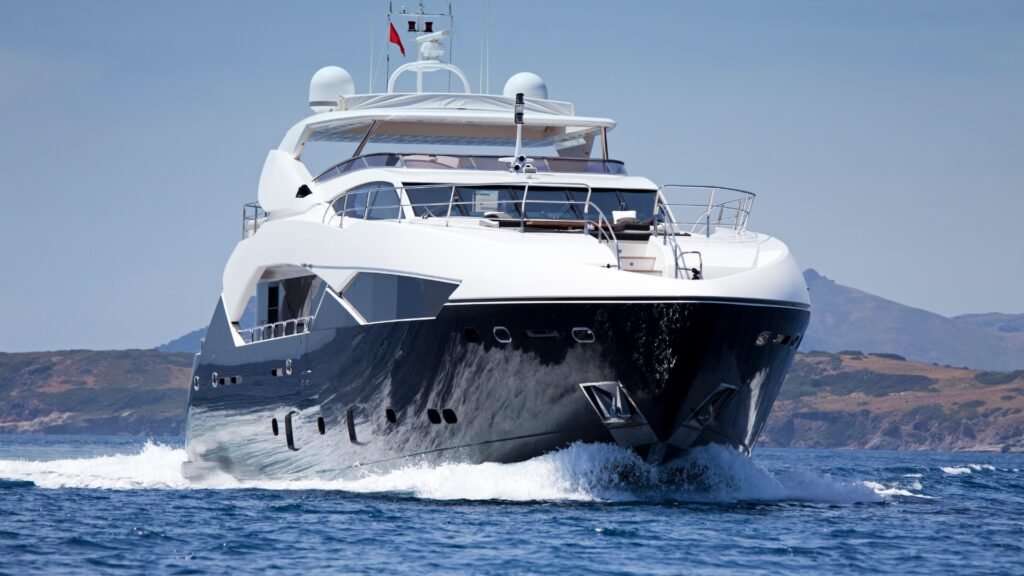
Selling a boat starts with a number, and that number has to come from somewhere real. Rather than looking at what other boats are asking, we look at what similar boats have actually sold for, in similar condition, in a similar size and age bracket. That is the difference between a price that attracts serious enquiries and one that sits there collecting time-wasters.
Once the price is set, we arrange professional photography and video at the berth. This is not a phone camera at midday. It is planned around light, tide and the boat's best angle, above and below deck, and it produces the images that make a buyer stop scrolling.
The written listing then does the work a buyer would otherwise do by asking you directly. Engine hours, service history, equipment, ownership history, known issues. All of it set out plainly, so the questions get answered before they are asked, not after a viewing has been arranged for nothing.
That listing goes out to the international portals where buyers are actually looking, which is where yacht brokers Santorini earn their fee, giving a boat here the same reach as one listed in Palma or Antibes.
Enquiries then get filtered. Most people asking about a boat are not in a position to buy one. We establish who has funds confirmed and is serious before anyone is given a private viewing by appointment. You are not fielding calls from tyre-kickers or clearing your diary for someone who was never going to sign.
From there we run the negotiation, the survey, and the paperwork through to completion. You are not chasing a surveyor's report, translating a contract clause, or working out what documents a foreign buyer's bank requires.
Commission is five per cent, payable on completion, nothing upfront.
Whatever figure you see attached to a similar boat online tells you what someone hopes to achieve, not what anyone has paid. Asking prices are aspiration, set by a seller or a broker before the market has had any say in the matter. They are not evidence, and treating them as such is the first mistake most owners make when they start to think about a figure for their own boat.
What counts is what has actually changed hands. Achieved sale prices, drawn from real completions rather than listings still sitting unsold, are the only honest guide to where your boat sits. Everything else is guesswork dressed up as market knowledge.
From there, the detail does the work that the year on the transom cannot. Condition, engine hours, the age of the standing rigging, the state of the sails and the canvas, and how current the electronics are will move a valuation further than the build year ever will. A tender and outboard that are present, serviceable and ready to use add a genuine, practical value of their own. Buyers notice these things immediately, and they price accordingly whether or not the seller has thought to mention them.
Location matters just as much. A boat lying afloat in Greece, with her paperwork in order and a berth already secured, is worth more to a buyer than an identical boat ashore somewhere they would have to travel to, arrange transport for, and relaunch before they could even view her properly.
An asking price pitched too high does not simply sit there waiting for the right buyer. It sits there losing money for you. Every week a boat lingers unsold at an inflated figure, serious buyers start to wonder what is wrong with her, and the listing itself starts to look stale. By the time the price comes down to where it should have been, the boat has acquired a reputation it never deserved, and you have paid for that mistake in time, in mooring fees, and in the discount eventually needed to shift a boat the market has already decided to ignore.
It starts with a visit to the boat in her own berth at Vlychada. We look her over properly, in the water, not from photographs or brochures, and we give you an honest valuation based on her condition, her equipment and what similar boats are actually achieving in Greece at the moment. No inflated figure to win the listing, no guesswork.
Once you are happy with the number, we agree an asking price and put it in writing. A short listing agreement sets out what we are doing, how, and on what terms, so there is no ambiguity later.
We then arrange photography and video at Vlychada itself, in her own setting, showing her as she actually is. Good images matter more than most owners expect, and they are done properly, on the day, at the berth.
The listing is published and pushed out to the international portals, giving her the widest possible reach to buyers actively looking for a boat in Greece, not just local interest.
Enquiries come in and we filter them. Only buyers who can demonstrate their funds are in place are offered an appointment. This protects your time and keeps casual lookers away from the boat.
Viewings are private, by appointment, at the berth. You are not disturbed by passing traffic or idle curiosity, only by people in a genuine position to buy.
When an offer comes in, we handle the negotiation on your behalf, keeping you informed at each stage and advising you plainly on where things stand.
Once terms are agreed, survey and an on-the-water inspection are arranged locally, so the buyer can satisfy themselves on condition and performance before anything is finalised.
Contracts are then signed and the deposit is held properly, in line with the agreed terms, protecting both sides through to completion.
Completion follows, along with deregistration and handover, at which point the boat formally passes to her new owner.
Our fee is 5 per cent, payable on completion. Nothing is payable up front at any stage of this process.
A local broker replies with a realistic market figure, not a flattering one. No listing fee, no photography fee, flat 5% commission on completion.
We use these details only to value your boat and reply. No mailing list, no third parties. Prefer to talk? +30 698 013 5656.
Selling privately from Santorini looks like the cheaper route until you count the hours it actually takes. Most of the enquiries that come in through a listing site or a message board are not buyers. They are people checking prices, killing time, or asking questions they have no intention of following up with funds. You end up screening calls and replying to emails for weeks before anything resembling a serious buyer appears.
Each of those enquiries that does turn into a viewing means opening the boat, driving to Vlychada, arranging access, and giving up a morning or an afternoon. Do that a dozen times for people who were never in a position to buy and the cost in fuel, time and disruption adds up quickly, long before any sale is close.
When a genuine buyer does appear, you are negotiating alone, with no sold comparables to point to and no read on what similar boats have actually made. Buyers know this. They will use it to push the price down harder than a broker with recent transaction data would allow.
Deposits taken privately are rarely held anywhere accountable. Without a client account behind the transaction, both sides are exposed if a buyer changes their mind or a dispute arises over condition or timing. The paperwork for transfer of title and deregistration in Greece carries its own risks if it is not handled by someone who does it routinely.
Meanwhile the boat sits at Vlychada accruing berthing fees, insurance premiums, antifouling and servicing costs whether she sells this month or not. None of that stops while you wait for the right buyer to find you on their own.
A boat that goes unsold through a full season costs her owner far more in these accumulated expenses than a five per cent commission on completion, paid only once the sale is done and with nothing owed upfront.
Once a price is agreed, the terms are set out in a sale and purchase agreement. This document names the boat, the price, the deposit, the conditions still to be met, and the date fixed for completion. It is the reference point for everything that follows, so it needs to be accurate rather than tidy.
The buyer's deposit is paid into a client account, not to you directly and not to the buyer's own account once it has left them. This protects both sides. It means the money is held by a neutral party until the conditions in the agreement are satisfied, rather than sitting with the seller before the boat has actually changed hands.
Most agreements are subject to survey and to an on-the-water assessment of the boat under way. If the surveyor finds defects, you and the buyer negotiate a settlement before completion. This is usually a price adjustment, a repair carried out at your cost, or in some cases the buyer walking away and the deposit being returned. None of this is automatic; it is agreed case by case.
Before completion you will need to show clean title, meaning there is no outstanding finance registered against the boat, and evidence of her VAT status within the EU. Buyers ask for this early, and it is worth having the paperwork ready rather than chasing it once a deal is close.
Completion itself is marked by the bill of sale, which transfers ownership. Alongside it, the boat is deregistered from her current flag and registered to the new owner, and the berth or mooring agreement at Vlychada is transferred or reassigned to reflect the change. Insurance also changes hands on the day of completion, so there is no gap in cover for either party.
This is general information, not legal advice.
The season at Vlychada, Santorini runs year-round. That does not mean buyer interest is constant throughout the twelve months, and it is worth understanding the shape of the year before you decide when to bring your boat to market.
Enquiries tend to build from late winter into spring, as buyers who have spent the off-season thinking about a purchase start to look in earnest. Many want the boat in the water and ready to use for the summer ahead, which means they are working backwards from a delivery date rather than browsing idly. If your boat is listed and ready in that window, you are talking to people who are actually planning to buy, not simply looking.
Photographs and viewings both benefit from the same stretch of the year. Once the light softens and the anchorages fill, a boat sitting at Vlychada looks the way a buyer imagines using her, which matters when the decision is as much about lifestyle as it is about specification. A private viewing arranged during these months, once a buyer has been vetted and funds confirmed, tends to close the gap between interest and offer far faster than one held in the depths of winter.
After the summer crowds thin, interest slows. A boat still on the market late in the year is likely to sit quietly until the following spring, regardless of condition or price, simply because most serious buyers have already made their decision for the season.
Conditions across the Cyclades in summer are what shape the kind of boat that moves quickly here. Afternoons often bring a firm, steady wind and a short, sharp chop between the islands, so buyers look for boats that handle that water comfortably rather than vessels built purely for flat, sheltered cruising. A solid sea-keeping hull, decent tankage for longer island-hopping, and gear that copes with sun and salt day after day all count for more here than they might in calmer waters. Boats that meet that brief tend to sell with less negotiation.
At Vlychada, a boat sits among working yachts, not in a showroom, so the difference between a boat that sells and one that lingers often comes down to how she presents at the pontoon. A deep clean, inside and out, and a properly polished hull cost relatively little and change the first impression completely. Buyers walk the length of a boat before they open a single locker, and that first look sets their mood for everything that follows.
Tenders, covers and canvas deserve the same care. A stained bimini or a tender left grubby on the davits suggests neglect, even if the engines below are in good order. It costs a fraction to have these cleaned or replaced, and it removes doubt before it forms.
Have the engines properly serviced and keep every invoice and log entry to hand. A buyer with confirmed funds will ask for the service history before they ask for anything else, and a complete file answers questions before they are raised. Paperwork does not lie, and it saves you having to argue a point that a receipt could settle.
Perished hoses, tired batteries and instruments that no longer read correctly are worth replacing now rather than later. A surveyor will list every one of them in his report, and it is cheaper and calmer to deal with them on your own terms than to have them appear as findings after an offer is on the table.
Clear out personal belongings before any viewing. A boat full of someone else's life is harder for a buyer to imagine as their own, and clutter distracts from the boat itself.
A full repaint or a new suite of electronics rarely returns what it costs. Buyers pay for a boat that is sound and honestly presented, not for cosmetic work done purely to sell her.
On an older boat, a pre-listing survey is worth commissioning. It removes the surprise that so often kills a deal after an offer has been accepted, and it lets you negotiate from a position where you already know what the boat is.
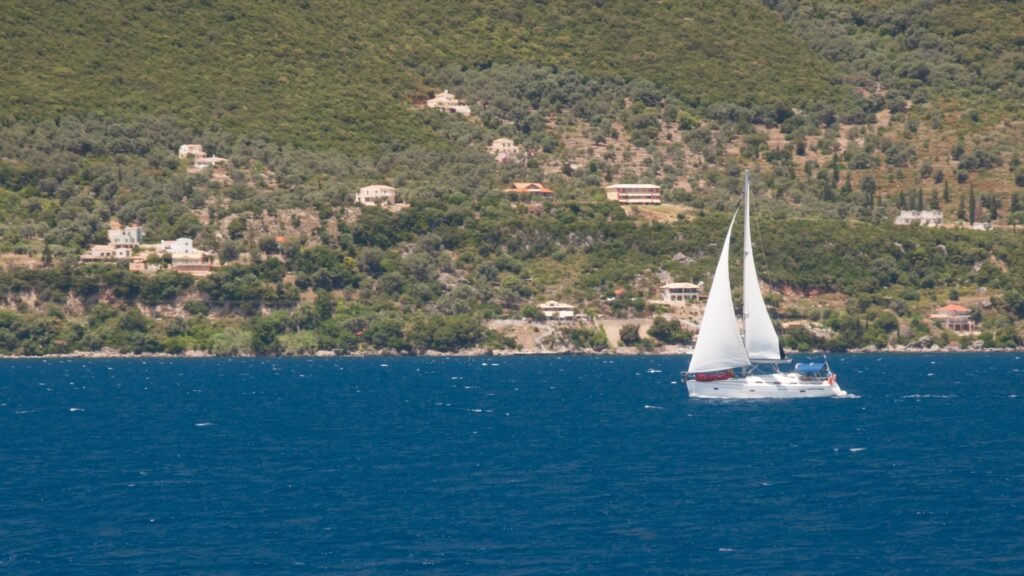
Vlychada is a harbour on the south coast of Santorini, in the Cyclades, and it is built to hold a working fleet rather than a handful of pleasure craft. There are around eighty berths, and the harbour takes yachts up to twenty metres length overall. Alongside depth is three metres, which is enough for most cruising monohulls and motor yachts in that size range without special arrangement. The port operates year-round, so a boat kept here is not laid up for half the year waiting for a season to open.
Haul-out and craning are available on site, run by the Thira Municipal Port Fund, seven days a week. That matters more than it sounds. A seller does not have to plan a survey or a pre-purchase inspection around a lift-out slot that only exists in summer, and a buyer can see the hull out of the water within days rather than weeks.
Walking the pontoons at Vlychada, you see a working harbour rather than a resort marina: fishing boats, local charter craft, and cruising yachts sitting alongside one another, with the volcanic cliffs of Santorini behind. It has a plain, practical character rather than a polished one, and that suits owners who want their boat looked after rather than looked at.
Being on Santorini, the harbour sits close to the trades a seller usually needs: riggers, mechanics, osmosis and antifouling specialists, and the general marine trades that follow yacht traffic through the Cyclades in season. None of that has to be arranged from the mainland or shipped in specially, which keeps any pre-sale work straightforward.
For you as the owner, this makes the boat easy to show. We arrange a private viewing by appointment once a buyer has been vetted and their funds confirmed, and the year-round operation of the port means we are not restricted to a narrow summer window to do that. Vlychada is also a manageable, self-contained site, so viewings are quick to organise without the congestion of a larger commercial marina. Our commission is five per cent, payable on completion, with nothing asked of you up front.
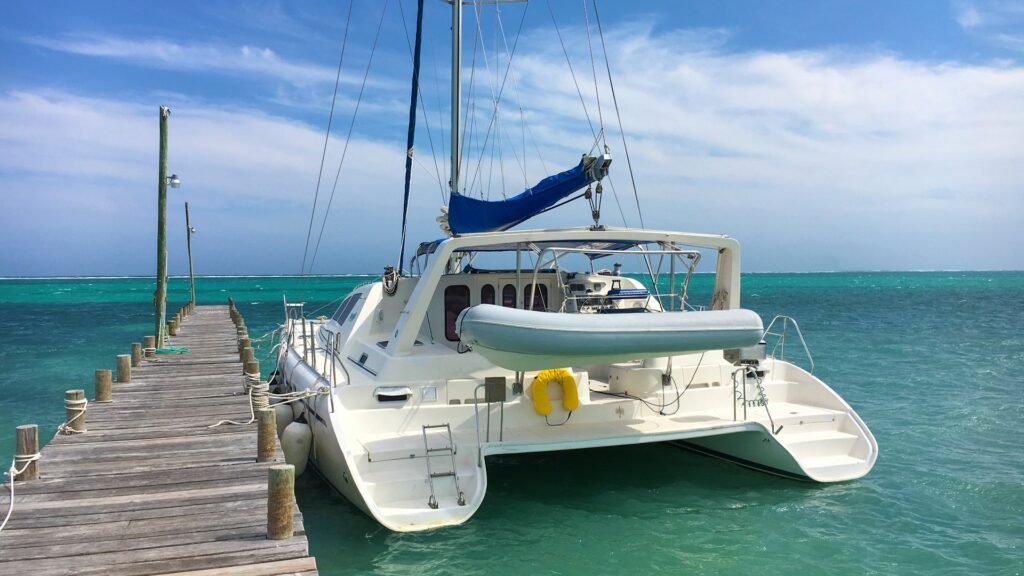
Vlychada holds around 80 berths, with a maximum length overall of 20 metres and an alongside depth of 3 metres. Those three figures are what actually decide whether your boat fits here, not the marketing description of the marina. A buyer viewing her needs to know, before they get anywhere near an offer, that her length overall, beam and draft sit comfortably within what the berth can physically take.
This matters more than most owners assume. A boat at 19.5 metres with generous beam may be technically under the 20 metre limit but awkward against a neighbouring berth, and a draft close to 3 metres leaves no margin at low water or after silting. Get the numbers wrong and you narrow your buyer pool to almost nobody, because the next owner has to live within the same limits you did.
If your berth transfers with the sale, say so plainly and early. In Greece, berths are not simply reissued to whoever turns up with a cheque. Availability is tight, and a marina that already knows your boat, her dimensions and her paperwork removes a genuine obstacle for the buyer. A transferable berth at Vlychada, with haul-out and launching available on site seven days a week through the Thira Municipal Port Fund, is a practical advantage you can point to, not a sentimental one.
Before you list her, go back to your own agreement and read it as a buyer would. Check whether the berth is assigned to you personally or to the vessel, whether it is renewed annually or on a longer term, and whether transfer requires the port authority's consent rather than simply your signature. Confirm any outstanding fees are settled, because unpaid charges can hold up a transfer at the worst possible moment. None of this is complicated, but it needs to be right before a buyer's lawyer starts asking the same questions on a tighter timetable.
| Detail | Value |
|---|---|
| Berths at Vlychada, Santorini | about 80 |
| Maximum length overall accepted | 20 m |
| Alongside depth | 3 m |
| Travel lift capacity | not published tonnes |
| Haul out and craning | Yes - haul-out and launching available on site at Vlychada (Thira Municipal Port Fund), seven days a week |
| Season | Year-round |
| Nearest airport | Santorini (Thira) National Airport (JTR) |
| Transfer to the berth | about 15 min (the port fund lists Vlychada 6 km from the airport) |
| Brokerage fee | 5% of the sale price, payable on completion |
Your boat lies at Vlychada, on Santorini, and the buyer viewing her will most likely arrive by air. The nearest airport is Santorini (Thira) National Airport, JTR. The transfer from there is about 15 minutes, with the port fund listing Vlychada as 6 km from the airport.
That short distance matters. A buyer who has flown in on a tight schedule does not want to lose the morning to traffic or a wrong turn on unfamiliar roads. Fifteen minutes from the terminal to the pontoon means the appointment can be set for a precise time, and kept to it.
Every viewing is arranged in advance. We agree the time with the buyer directly, and we agree it with you. There is no turning up unannounced and no browsing along the quay. When the buyer arrives, your boat needs to be open, powered and ready to be walked through, not closed up and cold with the covers still on. A boat that has to be woken up in front of a buyer tells them something about how she has been kept, and it is rarely a good story.
One named broker attends, and that person knows the specification of your boat in detail: engine hours, service history, equipment fitted, what has been changed and when. The buyer is not handed a brochure and left to work it out. They get answers, on the spot, from someone who has been through the boat before they arrived.
Time on board is not rationed. There is no next appointment hovering, no queue of other buyers waiting their turn at the passerelle. A serious buyer who has flown to Santorini for this will want to open lockers, check the engine bay, sit in the cockpit, and take his time. That is what he gets.
It is also worth understanding what a flying visit usually involves. Buyers who travel to view rarely come for one boat alone. They tend to see two or three in the same trip, often on the same day, moving between marinas or anchorages. Against that backdrop, a boat that is ready the moment they step aboard, rather than one they have to wait for, makes a different impression than one that keeps them standing on the pontoon.
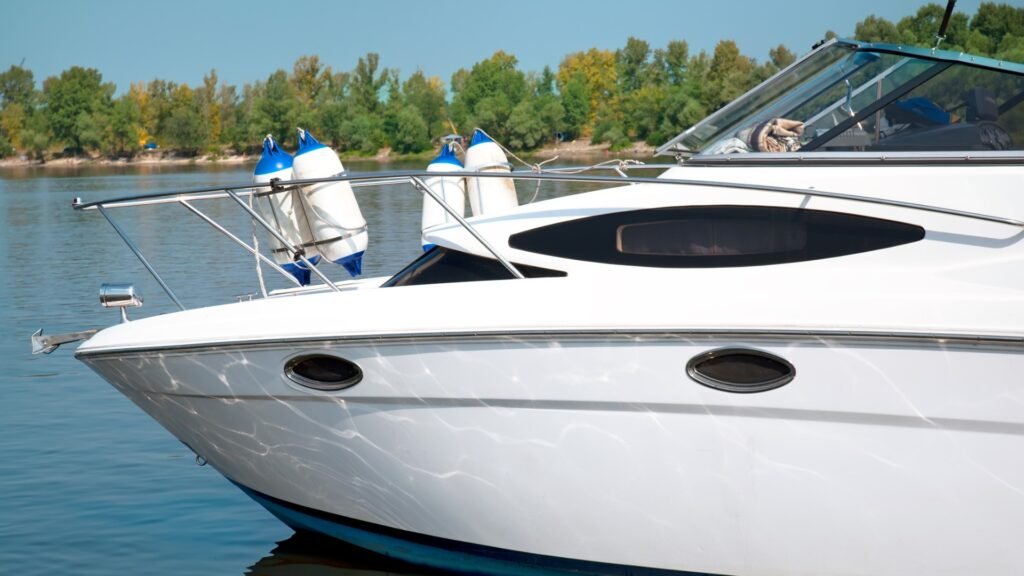
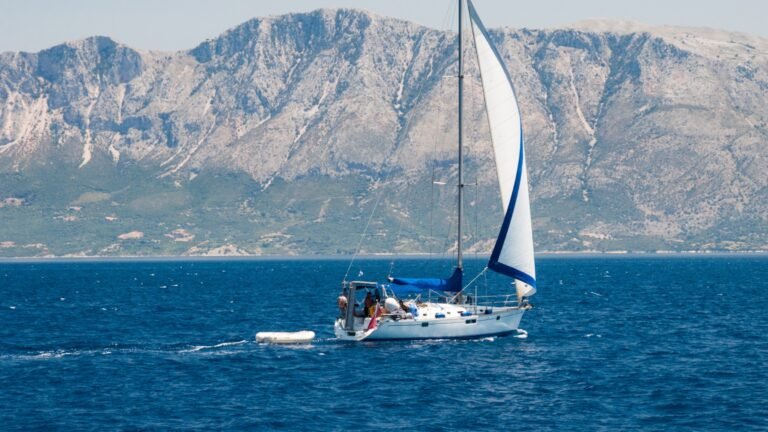
The volume market around Santorini and across the Cyclades sits in the ten to sixteen metre cruising monohull band. These are the boats that move most often and most predictably. Buyers here are typically private owners looking for a boat they can sail themselves for a few weeks a year, sometimes with family aboard, sometimes chartering her out through a local agent to offset costs. They check rigging age, engine hours, and whether antifouling and standing rigging have been kept current, because these are the details that decide whether a boat sails next season or sits in the yard.
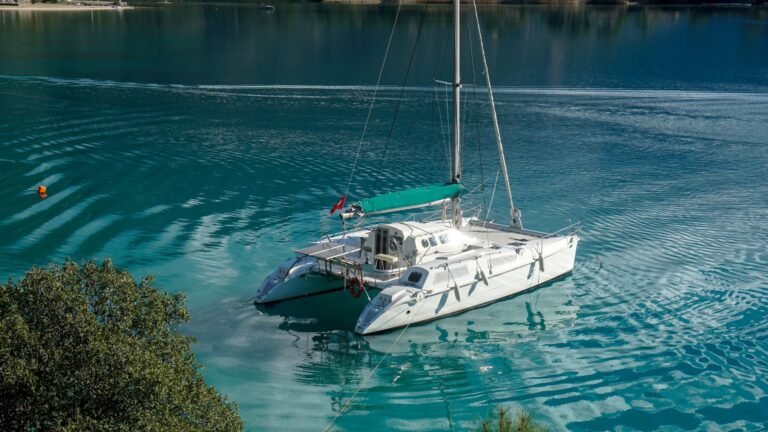
Sailing catamarans hold their value better than most types in this region, and they draw two distinct kinds of buyer. Private owners want the space and the stability for family cruising among the islands. Charter operators want a boat that can go straight into a programme with minimal downtime. Both groups check the same things: deck gear condition, sail inventory, and how the boat has been maintained if she has already had charter use, since that history affects resale as much as it affects day-to-day running.
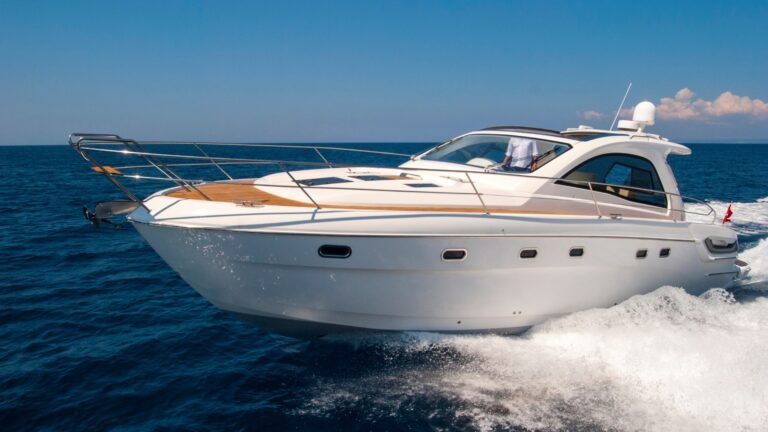
Motor yachts and flybridge boats are bought for a different rhythm of ownership: short hops between anchorages, lunch stops, and entertaining guests rather than long passages. Buyers tend to want a boat ready to use immediately, so they look closely at engine hours, generator condition, and the state of upholstery and electronics, since these boats are judged on comfort and reliability rather than sailing performance.
Larger yachts move more slowly through this market. There are fewer buyers, and the ones who do come forward have usually done their homework before they arrive. They ask for full survey history, crew requirements, and running costs, and they expect documentation to be in order before they will commit to a private viewing. Deals here take longer to close, but the buyers who reach that stage are serious and rarely walk away over price alone.
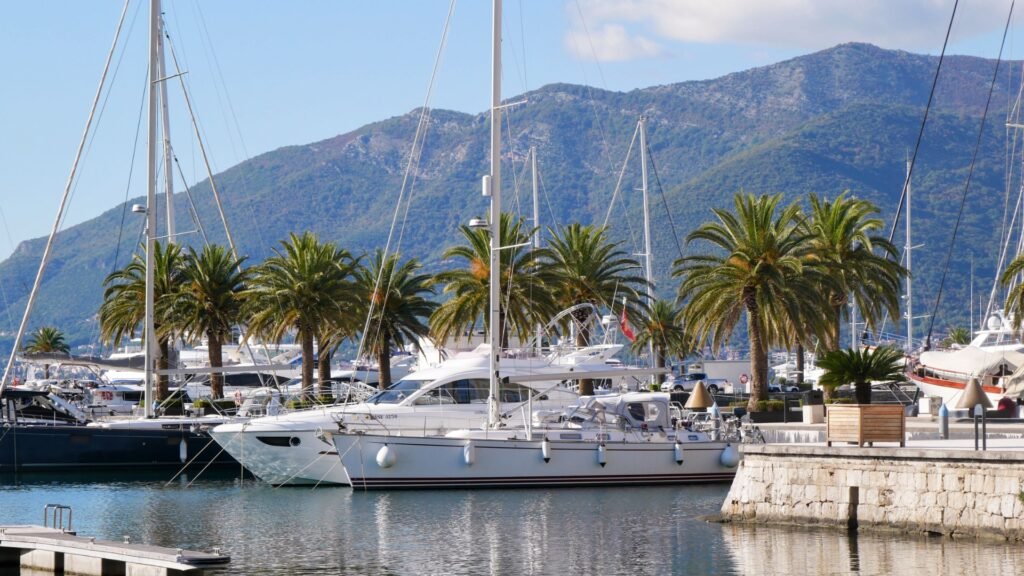
A boat sold in Greece changes hands on paper as well as on the water. The buyer wants three things in order: a clean bill of sale, evidence that the previous register has released her, and documentation of her VAT status within the EU. Most owners selling here keep the flag she already wears; a change of flag is a choice, not an obligation, and it is usually driven by the buyer's residence rather than by where the boat is lying.
Where a buyer does want the Greek flag, private pleasure craft are entered through the local port authority and the paperwork is straightforward once the deletion certificate from the old register is in hand. Private boats cruising Greek waters also carry the TEPAI cruising contribution, which is calculated on length and paid monthly or annually. We handle the sequence so the two sides are never waiting on each other, and we tell you before you sign which document is going to be slowest.
Vlychada sits on the south coast of Santorini, on the western side of the Aegean's Cyclades island group, facing open water beyond the caldera coastline the island is known for. The marina lies apart from the busier anchorages to the north, giving boats a quieter departure point for short passages toward the other Cycladic islands and the wider Aegean. Santorini (Thira) National Airport, code JTR, is the nearest airport, about 15 minutes away by road, with the port authority listing the distance as 6 km.
We charge 5% of the final sale price and it is payable only on completion. There is nothing to pay up front, no listing fee and no photography charge. If she does not sell, you owe us nothing at all.
No. She stays exactly where she lies at Vlychada, Santorini and buyers come to the pontoon. Moving a boat for a sale costs money, adds risk and rarely helps. Her own berth at Santorini is the best showroom she has.
A correctly priced boat at Vlychada, Santorini normally sells within three to six months, and most of that time is spent waiting for the right funded buyer rather than waiting for enquiries. Overpriced boats sit for a year or longer.
One named broker handles your boat from listing to handover. The same person answers the enquiry, qualifies the buyer, meets them at the berth at Vlychada, Santorini and runs the viewing. You are never passed around a call centre.
Proof of ownership, the registration document, the VAT status paperwork and invoices for any major works. Missing paperwork is the most common reason a sale collapses late. This is general information and not legal advice, so check your own position.
We look at recent completed sales of the same model, current asking prices, her condition, her hours and her equipment, then set a figure that attracts funded buyers rather than tyre kickers. A survey usually confirms that number rather than changing it.
Send us the make, model, year and berth number and we will come back with a realistic market figure, not a flattering one. Flat 5% commission on completion, no listing fee, no photography fee.
Value my boat+30 698 013 5656