Sell her from her own berth at Adamas, Milos. One named broker, funded buyers only, private viewings by appointment. 5% on completion, nothing up front.
Request a valuationView yachts for saleHome › Yacht brokers Cyclades › Sell Your Boat Milos
Sell your boat Milos: the quickest route is to leave her exactly where she lies at Adamas, Milos and let the buyers come to the pontoon.
Adamas sits on Milos, in the Cyclades, and the port operates year-round rather than closing for winter. Milos National Airport is close by, with the Hellenic Ports Association placing the port around 4.5 km from the runway, roughly a ten-minute drive. That proximity matters when you are coordinating viewings or handover logistics with a buyer flying in for the day. Berth numbers and maximum length overall for the marina are not published, so we work from current availability when a serious enquiry comes in.
Selling here works the same way it does anywhere we operate: five per cent commission, payable on completion, nothing charged upfront. One broker is assigned to your boat from the initial valuation through to the handover, so you deal with a single point of contact throughout rather than being passed between departments. Viewings are private, arranged strictly by appointment, and only take place once a buyer has been vetted and their funds confirmed. That keeps casual lookers off your deck and protects your time as much as your boat.
Greek owners moving within Adamas tend to know the marina staff by name already, so the conversation starts differently. They go straight to the engine hours and the service history, because they have usually seen the boat pass by for years and know what it looks like from the outside. What sends them away from a deal is a logbook with gaps in it, or antifouling work that has clearly been skipped a season or two.
Northern European buyers looking at Milos want the boat lying here specifically, so they can land and be aboard within days rather than waiting on a delivery skipper. They inspect the berth contract first, then the flag and VAT paperwork, since those are what actually let them use the boat immediately rather than in principle. Any ambiguity over the Greek cruising tax status or a berth that is not transferable tends to end the conversation quickly.
Charter operators are colder about it. They want a hull that already carries valid Greek commercial paperwork and holds a berth at Adamas, because reapplying for either costs them a season of trading. They go through the safety certificate and survey history before anything else, and they walk if the paperwork needs restarting from scratch or the layout does not suit charter guests.
First time buyers stepping up from something smaller are more cautious across the board. They ask about running costs and berth fees before they ask about performance, and they want to understand what owning something this size actually involves day to day. They tend to walk away when the boat feels larger than they are ready to handle, regardless of how well she is presented.
Adamas runs a year-round season, and that keeps enquiries fairly steady rather than bunched into a spring rush. You will still see more viewings booked from late spring through early autumn, but the marina does not go quiet over winter the way some smaller anchorages do. That matters if you are timing a sale, since there is no single narrow window you need to hit.
Start with the valuation. You need a figure based on what similar boats have actually sold for, not what a handful of hopeful owners are asking for on a listing site this week. A broker who works Milos and the surrounding islands sees those completed sales, the ones that never get advertised again because the deal is done, and prices your boat against that reality rather than against wishful thinking.
Photography and video come next, shot properly at the berth, in decent light, showing the boat as she sits rather than as a set of dim phone snaps taken in a hurry. This is the material that gets a buyer to stop scrolling. You do not need to arrange a photographer, work out tides or lighting, or stage the boat yourself.
The written listing should answer the questions a serious buyer would otherwise have to ask one by one: engine hours, service history, ownership, what is included and what is not. Get this right and you cut out weeks of back and forth. Get it wrong and you spend your evenings answering the same email three times.
That listing then goes out to the international portals where buyers for Greek boats actually look, not just a local noticeboard. Among yacht brokers Milos deals with buyers from well beyond the island, and distribution is what makes that reach possible.
Enquiries need filtering. Most people asking about a boat are not ready to buy one. A broker checks that funds are confirmed before anyone is given an appointment, so you are not clearing your diary and tidying the boat for someone who was never going to sign anything.
From there the broker runs the negotiation, coordinates the survey, and manages the paperwork through to completion, keeping both sides moving without you having to chase either. Commission is five per cent on completion, nothing before then. You stop doing the admin and start waiting for a result.
What you see listed online for boats similar to yours at Adamas is not a valuation. Those are asking prices, set by other owners and other brokers, and plenty of them sit unsold for months. What actually tells you what a boat is worth is what similar boats have sold for, with money changed hands and a transaction closed. That is the only evidence a serious buyer or a serious broker will work from.
The year on the transom is a starting point, nothing more. What moves the number is condition throughout, engine hours against age, and whether the rig, sails and canvas are original or have been renewed. A buyer looking at two boats of the same model and the same year will pay more for the one with a newer suite of electronics and less for the one running instruments that were current a decade ago. A tender and outboard that actually work, rather than ones that need attention before they can be used, add real value rather than being treated as an afterthought.
Location matters too. A boat lying in the water at Adamas, with her paperwork in order and a berth already secured, is worth more to a buyer than an identical boat sitting ashore somewhere they have to fly to, arrange transport for, and then deal with unresolved registration or ownership questions. Buyers pay for certainty and for not having to solve problems that are not theirs to solve. A boat that is ready to hand over cleanly is worth a premium over one that merely looks similar in a photograph.
Setting the asking price too high does not protect your position, it erodes it. A boat that sits overpriced for weeks starts to look stale, and buyers who track the market notice how long she has been listed. Every reduction after that looks like a concession rather than a correction, and it invites lower offers than you would have taken at the outset. Pricing her correctly from day one, based on what has actually sold rather than what is merely being asked, is what protects the figure you eventually walk away with.
The process starts with a phone call or an email, and then a visit to your boat at her own berth in Adamas. We look her over properly, check the systems, the engine hours, the condition of the hull and rigging, and give you an honest valuation based on what similar boats have actually sold for, not what you might wish to hear.
Once you agree an asking price, we put it in writing. A short listing agreement sets out the price, the term, and what we will do to sell her. Nothing is payable up front, and there is no cost to you until the sale completes.
Next comes photography and video, shot on the boat at Adamas so buyers see her as she really is, in her own water, not staged elsewhere. These images go into the listing, which we then publish and push out to the international portals where serious buyers actually look.
Enquiries come in, but we filter them hard. Anyone who wants to view the boat has to show us their funds are in place first. We do not waste your time, or theirs, on people who are simply curious.
Viewings are private, by appointment, at the berth in Adamas. A buyer sees the boat properly, with no crowd and no pressure, and can ask whatever questions he needs answered.
When an offer comes in we negotiate on your behalf, keeping you informed at every stage so you always know exactly where things stand. Once a price is agreed, we arrange the survey and the private viewing locally, using surveyors who know these boats and this coast.
If the survey is satisfactory, contracts are signed and the deposit is held properly, in accordance with the agreed terms, so both sides are protected. From there we move to completion.
Completion covers deregistration from the Greek flag if required, the transfer of ownership, and a clean handover of the boat, her papers and her keys to the new owner. Our fee is five per cent, payable on completion, and nothing is payable before that point. We handle the paperwork, the timing, and the coordination between all parties, so that by the time you reach handover day, there is nothing left for you to chase.
A local broker replies with a realistic market figure, not a flattering one. No listing fee, no photography fee, flat 5% commission on completion.
We use these details only to value your boat and reply. No mailing list, no third parties. Prefer to talk? +30 698 013 5656.
Selling a boat yourself out of Adamas usually starts with the phone. Most of the calls are not buyers, they are people testing the water, brokers fishing on behalf of someone else, or enquiries with no funds behind them at all. You end up filtering all of that alone, with no way of knowing in advance which call is worth your afternoon.
Every viewing means opening her up, running the systems, making the boat presentable, and often driving down to the berth for someone who was never in a position to buy. You do this once or twice without complaint. By the fifth or sixth time it has become a part time job with no pay.
Buyers who deal directly with an owner also know you have no sold comparables to point to, and they use that against you on price. A broker with recent transactions behind them argues from evidence. An owner on their own is arguing from hope, and it shows.
If a deposit is taken privately, there is usually no client account holding it, which leaves both sides exposed if the deal falls apart partway through. The paperwork at completion, transfer of title and deregistration, carries real risk for an owner handling it without experience of how it is done properly in Greece.
Meanwhile the boat keeps costing money. Berthing at Adamas, insurance, antifouling, servicing, all of it continues whether she is under offer or simply sitting there through the season.
A boat that stays unsold through a full season generally costs her owner more in these running costs than a broker's commission would have taken from a completed sale. The commission is five per cent on completion, nothing before. Viewings are arranged only for buyers who have been vetted and whose funds are confirmed, which is what keeps your time, and your boat, from being wasted.
When you sell a boat at Adamas, the paperwork starts with a sale and purchase agreement. This sets out the price, the boat's details, and the conditions both sides have agreed to before anything moves. It is the reference point for everything that follows, so it needs to be accurate and complete.
The buyer's deposit is held in a client account, not passed to you directly and not left with the buyer either. This protects both parties: you know the funds exist, and the buyer knows the money cannot disappear before the deal completes. Neither of you should be asked to hand over a deposit into a personal account.
Most agreements are subject to survey and to an on-the-water inspection of the engines and systems. If the surveyor or the inspection turns up defects, these are dealt with between you and the buyer before completion, usually by an adjustment to the price or by you arranging the repair yourself. This is agreed in writing, not left to a verbal understanding.
You will need to show clean title, meaning there is no outstanding finance registered against the boat, and evidence of her VAT status within the EU. Buyers ask for this early, and it is far easier to have it ready than to search for it once a deal is on the table.
Completion itself involves a bill of sale, deregistration from the current flag, and registration under the new one. If the boat keeps her berth at Adamas, the mooring agreement is transferred to the buyer as part of the same process. Insurance changes hands on the day of completion, so there is no gap where the boat is uninsured under either owner.
This is general information, not legal advice.
The season at Adamas, Milos runs year-round, and for a seller that fact shapes almost every decision from listing to completion. Interest does not switch on and off with a calendar date. Enquiries continue through the winter months, even if viewings are fewer, because buyers based abroad often use the quieter period to research and shortlist before travelling out.
In practice, most serious buyers begin looking well before the summer, with a view to taking delivery in time to use the boat through the main cruising months. A listing that goes live in late winter or early spring reaches this group at the point when they are ready to commit, rather than when the boat is already competing with a full harbour of listed and lived-in boats.
A boat shows best, both in photographs and in person, during spring and early summer, when the light is clear, the water is calm enough for a proper viewing, and the boat can be seen underway rather than sitting flat against the quay. Once the height of summer passes and the Cyclades move into autumn, footfall at the marina drops away. A boat that has not sold by then is likely to sit through the winter and re-enter the market the following spring, so the timing of a listing matters as much as the price.
Summer conditions across the Cyclades are defined by strong, persistent wind and short, steep seas that build through the afternoon, with long settled spells either side of the peak season. This pattern favours boats that are built to handle a chop rather than boats designed purely for flat water. Buyers here tend to look for solid ground tackle, good sheltered cockpit shade, and hulls that sit comfortably at anchor in an open bay when the wind picks up. A boat that is well suited to these conditions, and marketed at the right point in the year, tends to move through the process more smoothly than one left to find a buyer out of season.
Berthed at Adamas, your boat is seen by anyone who walks the quay before a buyer ever steps aboard, so start with what is visible. A deep clean inside and out, with the hull properly polished, does more for a first impression than almost anything else you could pay for. Salt film, dull topsides and a musty saloon suggest neglect even when the boat is mechanically sound, and that impression is hard to undo once made. Look at the tender, the covers and the canvas. Sun-bleached cushions, a tender with a tired outboard, or biminis that no longer sit square all tell a buyer that things have been left to age rather than maintained. These are inexpensive to put right compared with what they cost you in a buyer's confidence. Get the engines serviced and keep the paperwork. A logbook showing regular servicing, with dates and hours, answers questions before they are asked and gives a broker something concrete to show. Replace perished hoses, tired batteries and instruments that no longer read correctly. A surveyor will list these anyway, and it is cheaper and calmer to deal with them on your own terms now than to have them appear as findings later, with a buyer watching the total climb. Clear your belongings out. Personal effects, family photographs, the accumulated clutter of years aboard, all of it gets in the way of a buyer picturing the boat as theirs rather than as yours. Be realistic about the larger jobs. A full repaint rarely returns what it costs, and a new suite of electronics is much the same. Buyers pay for a boat that is clean, sound and honestly presented, not for the newest screen in the cockpit. On an older boat, a pre-listing survey is worth commissioning yourself. It costs money before you have a buyer, but it removes the element of surprise that so often kills a deal after an offer has been made and both sides think the sale is agreed. Once you are ready, viewings are arranged privately by appointment, and only after a buyer has been vetted and their funds confirmed. Our commission is five per cent on completion, with nothing due upfront.
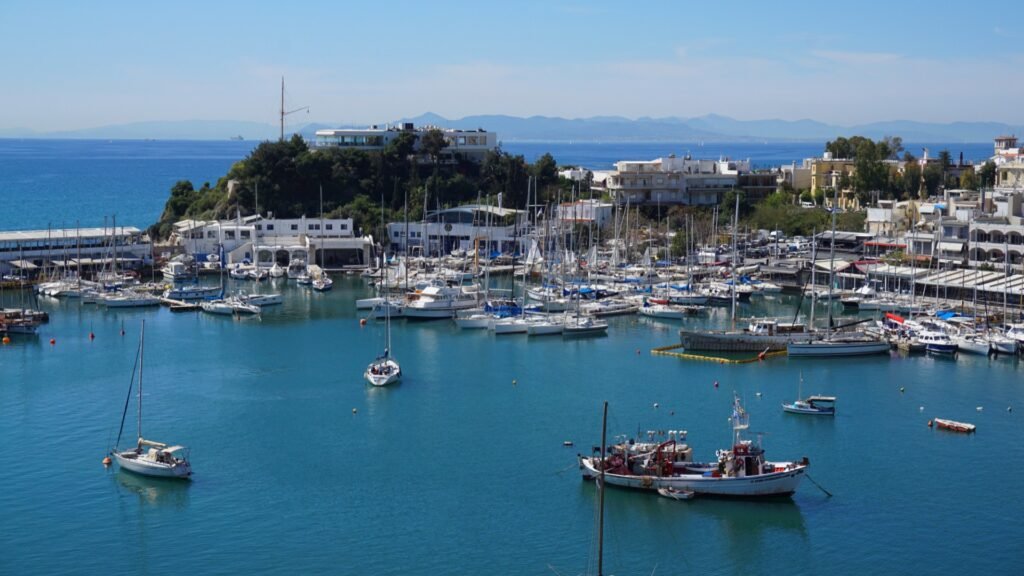
Adamas sits on the southern coast of Milos, in the Cyclades, and serves as the island's main harbour. It operates year-round, which matters if you are keeping a boat here rather than laying her up each winter and reopening negotiations every spring. A harbour that never fully closes gives a seller more flexibility over when a viewing can be arranged and gives a buyer confidence that the boat has been properly looked after through every season, not just the summer months. Walking the pontoons at Adamas, you find a working harbour rather than a manufactured marina resort. Fishing boats sit alongside private yachts, ferries come and go from the nearby quay, and the pace is unhurried but purposeful. Boats here tend to look used rather than staged, which is not a bad thing when a serious buyer is trying to judge condition rather than admire styling. There is enough activity on the water to make the harbour feel alive, without the crowding that can make viewings awkward or rushed. For a seller, Milos offers reasonable access to the trades a boat needs kept up: local riggers, electricians, and mechanics who know the island's boats and can turn work around without the boat needing to leave. Chandlery and provisioning are available in Adamas itself, and the wider island supports a steady trickle of maritime trade throughout the year, given its position on Cycladic routes. This means routine maintenance, minor repairs, and pre-viewing preparation can generally be handled locally rather than requiring the boat to be moved elsewhere. A boat lying at Adamas is easy to show. The harbour is close to the main town, so arranging a private viewing does not involve a long transfer or complicated logistics once a buyer has been vetted and funds confirmed. Milos itself has scheduled ferry and air connections to Athens, which keeps travel time reasonable for buyers coming from the mainland or from abroad. For an owner weighing up whether to sell here, the combination of year-round operation, straightforward access, and a genuine working harbour makes Adamas a practical, unpretentious place to keep a boat ready for sale.
Adamas is a working harbour on Milos, and like most Greek ports it was not designed with any particular yacht in mind. The berths that exist have fixed dimensions, and those dimensions are the first filter any buyer applies. Before anyone asks about engines or upholstery, they ask whether the boat will actually fit where you keep her, and whether she will fit anywhere else if the current arrangement falls through.
Length overall, beam and draft are not abstract figures on a specification sheet. They are what determine which slot in the harbour your boat can occupy, how close she sits to her neighbours, and whether she clears the seabed at low water on a falling tide. A boat that is a metre longer or a metre wider than the standard local berth can find her choices in Adamas narrow considerably, regardless of how well she has been maintained. Draft matters just as much, since a shallow berth simply will not take a deep keel, whatever the paperwork says.
This is why a berth that transfers with the sale is worth stating plainly rather than glossing over. In Greece, harbour space is finite and often allocated by history and relationship as much as by application, so an owner who can hand over a workable berth alongside the boat is offering something a buyer cannot simply go and buy elsewhere. It removes one of the more uncertain steps in relocating a boat to Milos, and buyers notice that.
Before you list her, go back to whatever agreement covers your current spot, whether that is a formal contract, a harbour authority allocation, or an understanding with a local agent. Check who it is actually with, whether it is personal to you or attached to the boat, and what is needed to transfer it, if it can be transferred at all. If any of that is unclear, it is worth resolving before a buyer asks, rather than during negotiations.
| Detail | Value |
|---|---|
| Berths at Adamas, Milos | not published |
| Maximum length overall accepted | not published m |
| Alongside depth | not published m |
| Travel lift capacity | not published tonnes |
| Haul out and craning | not published |
| Season | Year-round |
| Nearest airport | Milos National Airport (MLO) |
| Transfer to the berth | about 10 min (Hellenic Ports Association lists the port 4.5 km from the airport) |
| Brokerage fee | 5% of the sale price, payable on completion |
Getting a buyer to Adamas starts with the flight into Milos National Airport (MLO). From there, the transfer to the port is about 10 minutes, with the Hellenic Ports Association listing the port as 4.5 km from the airport. That is a short, straightforward hop, and it matters, because it means the whole journey from arrival to standing on deck can be measured in minutes rather than hours.
Once a viewing is agreed, we treat it as an appointment, not a drop-in. A date and time are fixed in advance, and the boat is prepared accordingly. She is opened up, powered, and ready to be walked through the moment the buyer steps aboard, rather than found shut up with hatches closed and systems cold. That preparation is not incidental. It is the difference between a buyer forming an impression of a boat that feels cared for and one that feels abandoned.
One named broker attends the viewing, someone who knows the specification in detail and can answer questions without reaching for a brochure. There is no rota of staff passing a buyer between them, and no queue of other viewings stacked up behind. The time on board belongs to that buyer, and it is unhurried by design.
Buyers who fly in for this rarely come to see one boat. The cost and effort of the trip mean they will usually have arranged to see two or three vessels while they are in the area, often across a single visit to Greece. That changes what presentation needs to achieve. A boat has to hold its own next to others seen the same day or the next, which means she cannot afford to be the one that needed an extra hour of preparation or an apology for a system not switched on.
Everything about the appointment, the readiness of the boat, and the attention of the broker exists to make sure that when a buyer compares what they saw at Adamas against what they saw elsewhere, the boat stands up to that comparison on her own terms.
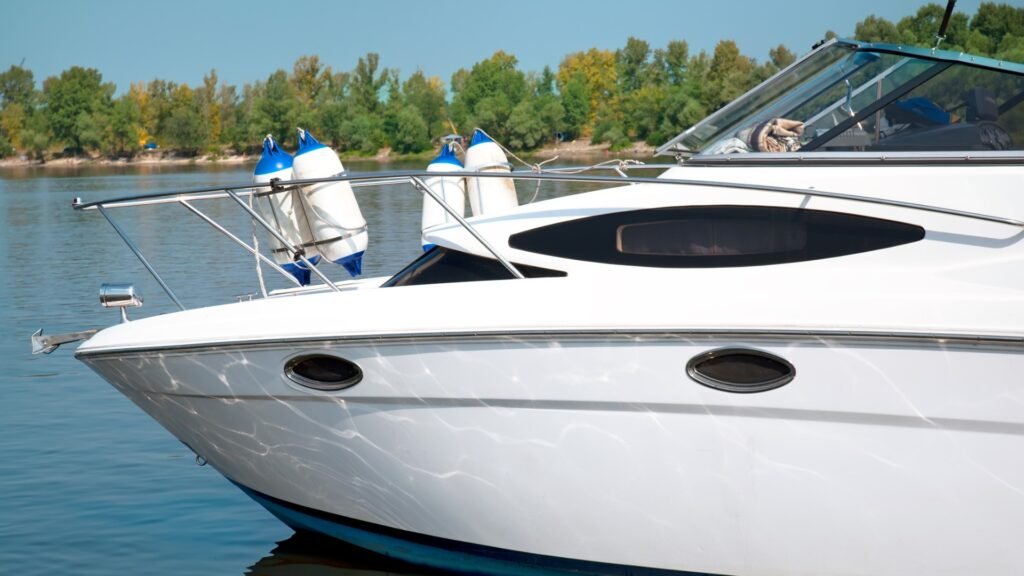
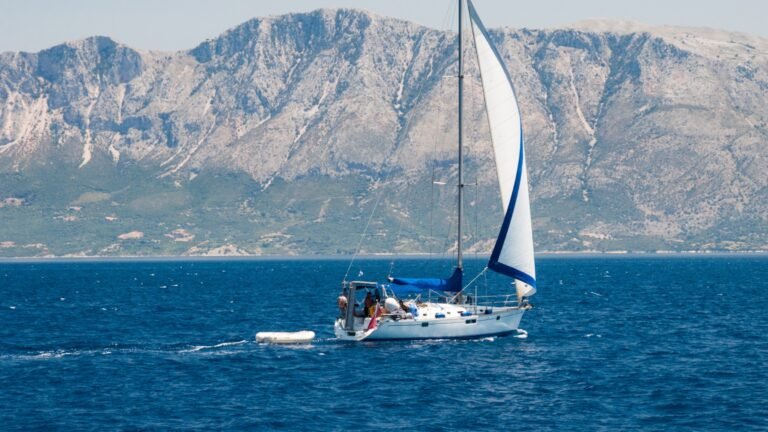
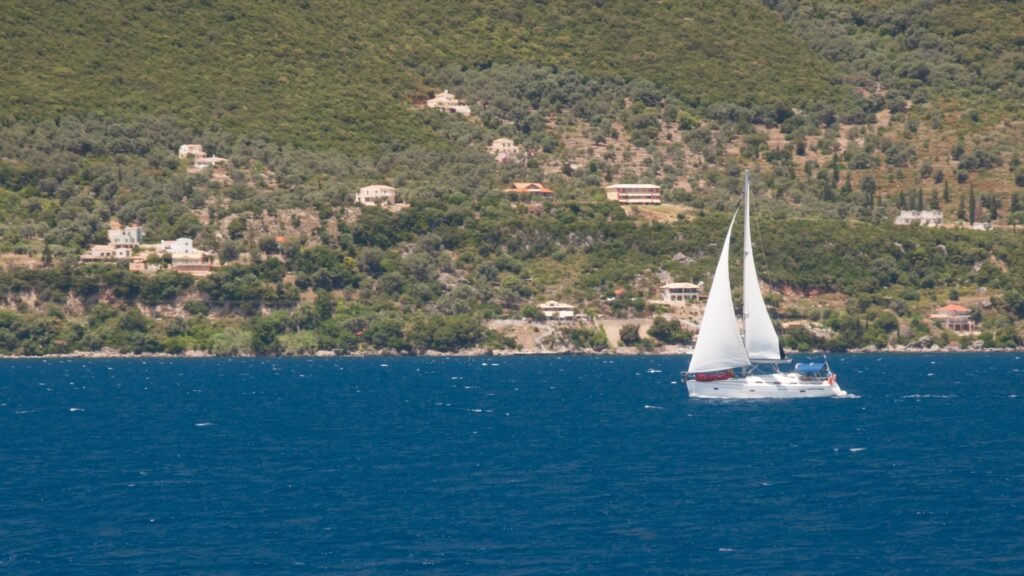
The steady turnover around Milos and the wider Cyclades sits in cruising monohulls between ten and sixteen metres. These are bought by owners who want to island-hop under sail, often moving up from a smaller boat or buying their first larger yacht after years of chartering. They check rig condition, standing and running rigging age, engine hours, and whether the antifouling and osmosis history are documented rather than described in passing.
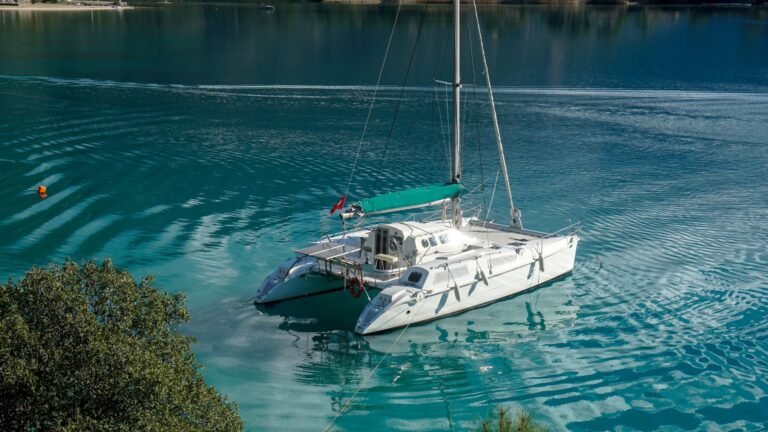
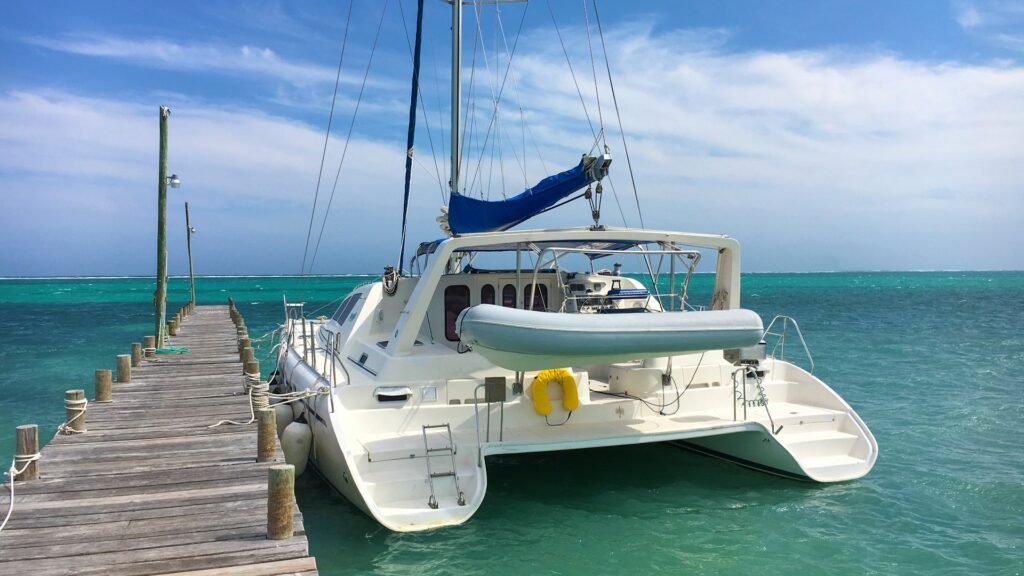
Sailing catamarans move in a different way. They hold their value better than most monohulls in this size range, and the buyers split fairly evenly between private owners after stability and deck space, and charter operators after a boat that will earn through a season. Charter buyers in particular go through the maintenance log line by line, and they want to see genuine survey history rather than a verbal account of how the boat has been kept.
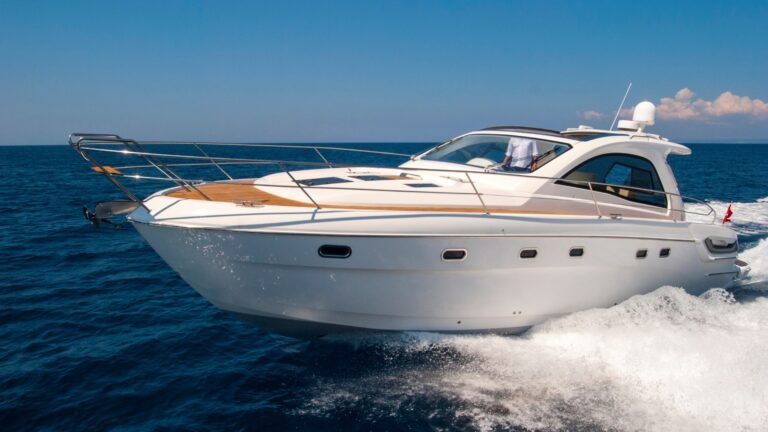
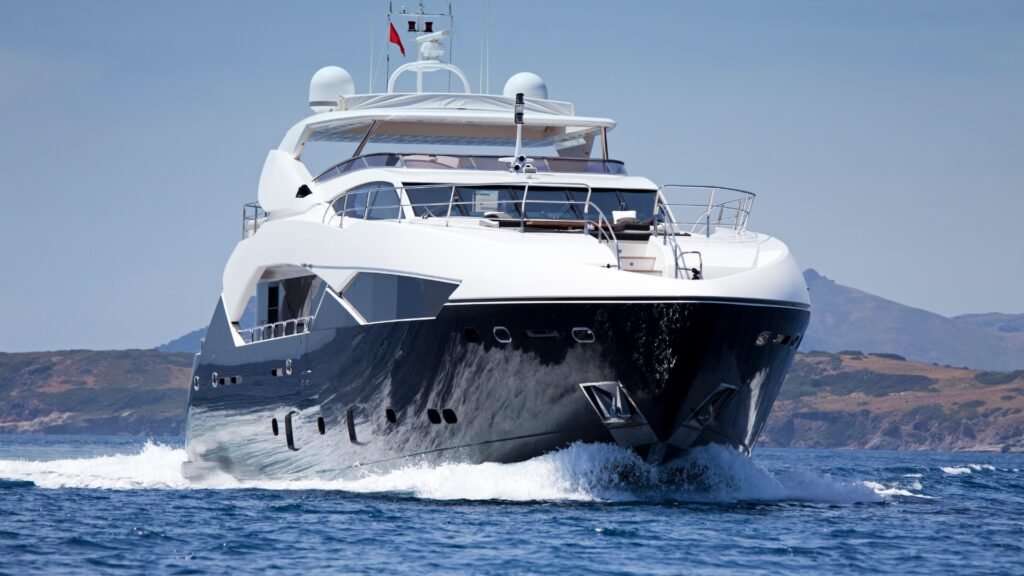
Motor yachts and flybridge boats are bought for a different pattern of use. These owners are usually after short hops between anchorages, lunch stops, and entertaining guests rather than long passages, so range and fuel burn matter less to them than deck layout, shade, and how easily the boat handles at low speed in a crowded anchorage. They check generator hours, air conditioning condition, and the state of the upholstery and tenders as closely as the engines themselves.
Larger yachts sell more slowly here, and that is normal rather than a sign of anything wrong with the boat. The buyers who do come to this end of the market arrive having already done their homework: finance arranged, a surveyor named, sometimes a captain involved in the decision from the start. They ask for full engineering records, class or flag documentation where it applies, and a clear account of any refit work, and they are unhurried about reaching a decision once they have that paperwork in hand.
Across all four categories, what separates a boat that sells from one that sits is the same thing: paperwork that matches the boat, and a seller who can answer a direct question with a direct answer.
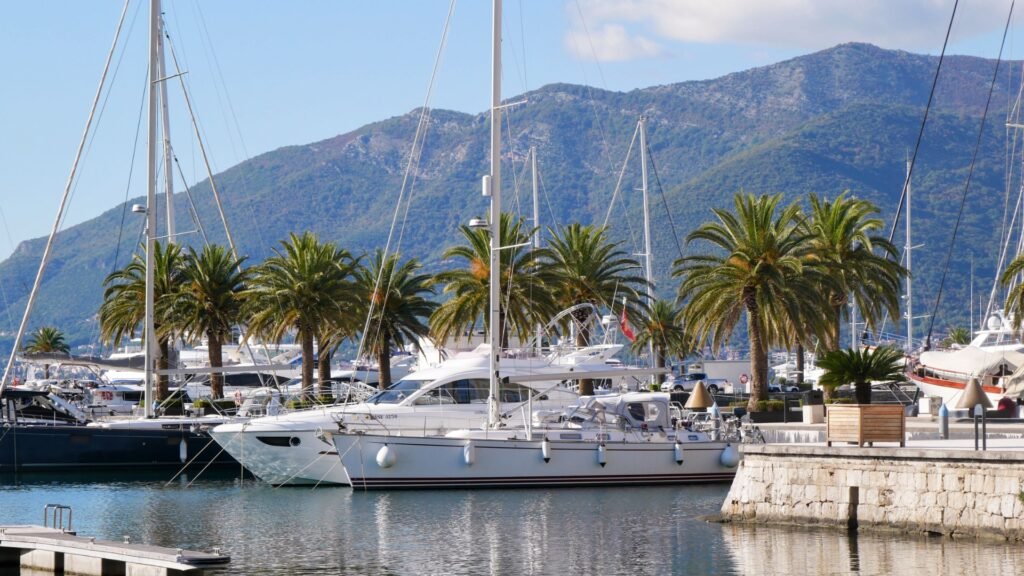
A boat sold in Greece changes hands on paper as well as on the water. The buyer wants three things in order: a clean bill of sale, evidence that the previous register has released her, and documentation of her VAT status within the EU. Most owners selling here keep the flag she already wears; a change of flag is a choice, not an obligation, and it is usually driven by the buyer's residence rather than by where the boat is lying.
Where a buyer does want the Greek flag, private pleasure craft are entered through the local port authority and the paperwork is straightforward once the deletion certificate from the old register is in hand. Private boats cruising Greek waters also carry the TEPAI cruising contribution, which is calculated on length and paid monthly or annually. We handle the sequence so the two sides are never waiting on each other, and we tell you before you sign which document is going to be slowest.
Adamas sits as the principal port of Milos, itself part of the wider Cyclades group in the Aegean. The town opens directly onto the sea that laps the island's coastline, giving straightforward access out into the surrounding waters of the archipelago. From here, a short passage brings you within reach of other Cycladic islands, making Adamas a practical point of departure rather than an isolated stop. For anyone arriving by air, Milos National Airport, known by its code MLO, lies close by. The Hellenic Ports Association lists the distance between the airport and the port at some 4.5 kilometres, which in practice translates to a journey of roughly ten minutes by road. This proximity matters for owners and buyers alike, as it means the boat is never far from a runway, and viewings can be arranged without a long transfer eating into the day. Adamas itself functions as the working heart of Milos, where ferries, private craft, and local traffic converge, and where the harbour infrastructure supports both leisure and commercial vessels. Its position within the Cyclades means that a short hop by water opens onto a wider network of islands, harbours, and anchorages, all within a manageable range of a single afternoon's sailing.
We charge 5% of the final sale price and it is payable only on completion. There is nothing to pay up front, no listing fee and no photography charge. If she does not sell, you owe us nothing at all.
No. She stays exactly where she lies at Adamas, Milos and buyers come to the pontoon. Moving a boat for a sale costs money, adds risk and rarely helps. Her own berth at Milos is the best showroom she has.
A correctly priced boat at Adamas, Milos normally sells within three to six months, and most of that time is spent waiting for the right funded buyer rather than waiting for enquiries. Overpriced boats sit for a year or longer.
One named broker handles your boat from listing to handover. The same person answers the enquiry, qualifies the buyer, meets them at the berth at Adamas, Milos and runs the viewing. You are never passed around a call centre.
Proof of ownership, the registration document, the VAT status paperwork and invoices for any major works. Missing paperwork is the most common reason a sale collapses late. This is general information and not legal advice, so check your own position.
We look at recent completed sales of the same model, current asking prices, her condition, her hours and her equipment, then set a figure that attracts funded buyers rather than tyre kickers. A survey usually confirms that number rather than changing it.
Send us the make, model, year and berth number and we will come back with a realistic market figure, not a flattering one. Flat 5% commission on completion, no listing fee, no photography fee.
Value my boat+30 698 013 5656