Yacht Brokers Greece

Sell Your Boat Volos

Sell her from her own berth at Volos. One named broker, funded buyers only, private viewings by appointment. 5% on completion, nothing up front.

Request a valuationView yachts for sale

HomeYacht brokers Northern Greece & Sporades › Sell Your Boat Volos

Sell your boat Volos: the quickest route is to leave her exactly where she lies at Volos and let the buyers come to the pontoon.

Volos marina holds around 300 berths and sits within easy reach of the Sporades, which keeps it on the radar for buyers cruising that stretch of Northern Greece. Berthing runs year-round, though most viewings happen between April and October when access and weather suit visiting buyers. Nea Anchialos National Airport is about 30 minutes away, roughly 30 kilometres by the airport operators own figures, and Thessaloniki is the practical year-round alternative at around two hours fifteen by road.

Selling here works the same way it does anywhere we operate: five per cent on completion, nothing charged up front, and no fee at all if the boat does not sell. One named broker handles your boat from the first valuation through to handover, so you are dealing with the same person throughout rather than being passed along a chain. Viewings are private, arranged by appointment, and only take place once a buyers funds have been checked and confirmed.

  • Volos at Volos, Northern Greece & Sporades: one named broker, private viewings at the berth, 5% payable only on completion and nothing up front.
  • The season at Volos runs Year-round berthing, but Apr-Oct in practice for buyer access.
  • Volos holds about 300 berths.
  • Volos takes yachts of up to not published metres length overall.
  • The nearest airport for a buyer flying in to view her is Nea Anchialos National Airport (VOL).
  • Transfer from Nea Anchialos National Airport (VOL) to the berth at Volos: about 30 min (30 km per the airport operator); Thessaloniki SKG is roughly 2 h 15 min by road and is the practical year-round alternative.

Who Is Buying at Volos Right Now

Greek owners trading up within the same marina make up a steady share of enquiries at Volos. They know the berths, the holding ground, and often the boat they are looking at by reputation before they ever step aboard. What they inspect first is the engine hours and service history, since they are usually moving from one well-maintained boat to a larger one and expect the same standard. They walk away quickly if the paperwork is incomplete or if the survey turns up work that was clearly deferred.

Northern European buyers arrive with a different priority. They want a boat already lying in Greece so they can fly in and be cruising within the week, and Volos suits that because of its access to the Pagasetic Gulf and the Sporades. They inspect the sail inventory, the electronics, and whether the boat is genuinely ready to leave the berth, not just afloat. They walk away over anything that suggests a winter of work before the first season, since that defeats the point of buying locally.

Charter operators are more particular about paperwork than condition. They are hunting for hulls that already hold Greek charter licensing and a secured berth at Volos, since both are slow to arrange from scratch. They inspect the layout for cabin count and guest capacity first, and they walk away from anything with an unclear registration history or a berth that will not transfer with the sale.

First time buyers stepping up from something smaller tend to focus on manageability. They inspect ease of handling, the state of the rigging, and whether the systems are straightforward rather than heavily customised. They walk away when a boat feels like more than they can maintain themselves, particularly on the mechanical side.

Berthing at Volos runs year-round, but in practice buyer access follows the season, roughly April to October. Enquiries build through spring, peak in the summer months when buyers can view and cruise in the same trip, and fall away over winter when flights and access become harder to arrange.
sell your boat Volos: buyers viewing a yacht on the pontoon at Volos
Private viewings happen at your own berth at Volos.

Yacht Brokers Volos

Selling a yacht from Volos starts with a valuation grounded in what has actually changed hands, not what someone else is hoping to get for a similar boat still sitting unsold on a portal. Your broker looks at comparable sales, the ones that closed, the prices that were actually paid, and builds a figure from that. Anything else is guesswork dressed up as an opinion.

Once you agree a figure, the boat gets photographed and filmed properly, at the berth, in good light, showing the boat as she is rather than as a stock image suggests she might be. This is not a job for a phone camera. Buyers scroll past dozens of listings a day, and the ones that stop them are the ones that look like someone took the trouble.

The listing itself is written to answer the questions a serious buyer would otherwise have to ask one by one: engine hours, last antifouling, standing rigging age, known issues, what is included and what is not. A vague listing generates weeks of email traffic. A precise one generates fewer enquiries but better ones.

That listing then goes out to the international portals where buyers actually look, which is not something you can do yourself with a personal account. Enquiries come back through your broker, who filters them. This is where yacht brokers Volos earn their keep, because most enquiries are not real. Only buyers who have been vetted and whose funds have been confirmed are given a private viewing by appointment. You are not fielding calls from people who are three years away from buying anything.

From an accepted offer, your broker runs the negotiation, coordinates the survey, and manages the paperwork through to completion, chasing documents, liaising with surveyors and lawyers, keeping the transaction moving. You are not drafting contracts or translating class certificates. Commission is five per cent, payable on completion, nothing before.

Sell Your Boat Volos: What She Is Actually Worth

Every valuation for a boat lying at Volos starts with the same discipline: ignoring what other owners are asking and looking instead at what has actually sold. An asking price published on a portal tells you what someone hopes to get, nothing more. It is not evidence of value, only of ambition, and the market in Greece is small enough that experienced brokers know which of those figures were ever tested by a real buyer.

What moves the number is condition, not the year stamped on the transom. Engine hours matter more than engine age. The state of the rig, the sails, and the canvas tells a buyer how much they will need to spend in the first season, and that figure gets weighed against your price whether you mention it or not. The generation of the electronics matters too, since a chartplotter or autopilot that is two generations behind current standards reads as a cost to the buyer, not a feature to you. A serviceable tender and outboard, included and ready to use, removes one more decision the buyer would otherwise have to make alone, and buyers pay for decisions they do not have to make.

Location does the same work in a different way. A boat lying in Greece, with her paperwork clean and a berth already secured, is worth more to a buyer than an identical boat sitting ashore somewhere they would need to travel to, arrange transport for, and re-document. You are not just selling a hull and a rig. You are selling the absence of friction, and friction has a cost that buyers price in immediately.

An asking price pitched too high does not sit there waiting patiently for the right buyer. It sits there ageing. Every week it stays unsold, buyers who look at Volos boats regularly begin to wonder what is wrong with her, and the eventual sale price often ends up lower than if she had been priced correctly from the start. Overpricing does not protect your position. It erodes it.

Sell Your Boat Volos: How We Actually Sell Her

It starts with someone coming to see the boat where she lies, in her own berth at Volos, not in a brochure. We look at her condition, her equipment, her maintenance record, and give you a valuation based on what is actually there, not what you hoped to hear.

From that we agree an asking price together and put it in writing, a proper listing agreement that sets out what we will do and what you can expect from us. There is nothing loose or verbal about it.

Photography and video are shot at Volos, on the boat, in her berth. Buyers looking at a listing from abroad need to see her as she is, not as a stock image of a similar model.

Once the material is ready, the listing goes live and is pushed out to the international portals where serious buyers are actually looking. It is not left to sit quietly on one website.

Enquiries come in from all directions, and we filter them properly. Only buyers who have shown us their funds are in place are offered an appointment to view. This protects your time and keeps casual lookers away from the boat.

Viewings happen privately, at the berth, by appointment. There is no open crowd wandering the pontoon, just a qualified buyer, their broker if they have one, and us.

When an offer comes in, we negotiate it with you, line by line if necessary, until there is a figure you are both willing to sign against.

After that, survey and a private viewing are arranged locally, with surveyors and engineers who know Greek boats and Greek waters. Any findings go back into the negotiation before contracts are finalised.

Once terms are settled, contracts are signed and the deposit is held properly, through the correct channels, not sitting in someone's personal account.

Completion follows, along with deregistration from the Greek registry and the formal handover to the new owner. Paperwork, keys, manuals, and the boat herself change hands in an orderly way.

Our fee is five per cent, payable on completion. Nothing is payable up front, at any stage before that.

What is your boat worth? Tell us six things.

A local broker replies with a realistic market figure, not a flattering one. No listing fee, no photography fee, flat 5% commission on completion.

We use these details only to value your boat and reply. No mailing list, no third parties. Prefer to talk? +30 698 013 5656.

Why Selling Her Yourself Is a Nightmare

Selling privately at Volos means you become the filter for every enquiry that comes in, and most of them go nowhere. You will field messages from people who have not arranged finance, who are still deciding whether they even want a boat, or who simply enjoy looking. Sorting the serious from the curious takes time you probably do not have.

Each viewing means opening her up, running the systems, making her presentable, then doing it again the following week for someone who was never going to buy. If you are not living aboard at Volos, that means travel, and travel on a schedule set by strangers rather than by you.

Buyers who deal directly with an owner also know you have no sold comparables to point to. Without recent transaction data behind you, you are negotiating on hope rather than evidence, and a practised buyer will use that gap to talk the price down.

Deposits taken privately are rarely held anywhere accountable. Without a client account standing behind the transaction, a deposit is just a promise, and promises have a way of being renegotiated once the buyer has had time to think.

Transfer of title and deregistration in Greece carries its own exposure. Paperwork done informally, without someone who handles it routinely, is where ownership disputes and delays tend to start.

Meanwhile the boat still costs money whether she sells or not. Berthing at Volos, insurance, antifouling, and servicing continue through every month she sits unsold, and none of that is optional.

A boat that goes through a full season unsold has cost her owner far more in berthing, insurance, antifouling, and servicing than a five per cent commission would ever have taken. The commission is paid once, on completion, with nothing up front. The running costs are paid every month, regardless of whether a buyer ever appears.
Owner trying to sell a yacht privately at Volos
Selling her yourself means fielding every timewaster in person.

Contract, Deposit and Handover

When you sell a boat at Volos, the paperwork carries as much weight as the price you agree. The sale and purchase agreement sets out the boat, the price, the deposit, and the conditions that must be met before the balance is paid. It is the document everything else hangs off, so it needs to be precise about what happens if a condition is not met.

The deposit is paid into a client account, not to you directly and not to the buyer's broker. This protects both sides. If the deal falls through for a reason covered by the agreement, the money is still there to be returned or applied, rather than sitting in someone's operating account.

Most agreements are subject to survey and a private viewing. If the surveyor finds defects, you and the buyer negotiate a price adjustment or agree repairs before completion. This is a normal part of the process and rarely derails a sale that was fairly priced to begin with.

Before completion, you will need to show clean title, meaning no outstanding finance or maritime lien against the boat. You will also need to evidence her VAT status within the EU, since this affects what the buyer can do with her afterwards. The bill of sale is the document that actually transfers ownership once the money has cleared.

Alongside this, the boat is deregistered from her current flag and registered under the new one in the buyer's name. If she is kept on a berth or mooring at Volos, that agreement needs to be transferred or reassigned, which the local agent handles as part of completion. Insurance changes hands on the day itself, so there is no gap in cover between owners.

This is general information rather than legal advice, and you should take proper advice on your own transaction.

Sell Your Boat Volos: When to List Her

Volos offers year-round berthing, which is not the same thing as a year-round market. In practice buyer access runs from April to October, and that distinction should shape when you decide to list. A boat can sit on her berth through the winter without issue, but a listing that goes live in December is unlikely to see a viewer until the weather turns.

Enquiries tend to build from late winter onwards, as buyers start planning their season and looking at what will be available for delivery. Most want to take the boat over early in that April to October window, ideally in time to get proper use out of the summer rather than buying a boat they can only enjoy for a few weeks. A listing that goes up in good time before the window opens gives a seller the best run at that demand.

Photographs and private viewings both do a boat more favours in the settled middle of that season than at either end of it. Light, calm water and a full marina give a much truer picture of a boat than the same berth in March or October. Once the window closes, a boat that has not sold is likely to sit until the following spring, so a late-autumn listing usually means a long wait rather than a quick sale.

Northern Greece and the Sporades have their own summer character. Mornings are generally calm, with a thermal breeze building through the afternoon and easing again towards evening, and conditions can turn fresh with little warning once the meltemi sets in. Anchorages among the islands offer shelter from most directions, but passages between them can be lively.

Those conditions favour boats that feel settled and capable rather than delicate. Buyers here tend to look for a solid motion under sail or power, good handling in a breeze, and enough shelter in the cockpit or on the bridge to make an afternoon crossing comfortable rather than an ordeal. A boat that shows well in a flat marina but feels nervous once the wind gets up will struggle to convince a buyer who knows these waters.

Sell Your Boat Volos: Survey, Refit and What to Fix

Volos gets its share of buyers arriving after a long drive or a flight into Athens, and the boat needs to look the part the moment they step aboard. Start with a proper deep clean, inside and out, and have the hull polished. It sounds obvious, but a dull topside and a musty cabin plant a doubt in a buyer's mind before they have even opened a locker.

Tenders, covers and canvas matter more than owners tend to think. A tender that has been left to bake on the foredeck, or a bimini gone grey and slack, tells a buyer the whole boat has been treated the same way, whether or not that is true. Have these cleaned, repaired or replaced where needed, and it will read as a boat that has been looked after properly.

Get the engines serviced and keep the paperwork to hand. A buyer, or more likely their surveyor, will ask for service history, and a complete file does more for confidence than anything you can say. While you are at it, replace any perished hoses, tired batteries or instruments that no longer work. A surveyor will list these regardless, so there is no advantage in waiting for them to be found rather than fixed.

Clear your personal belongings out of the boat before anyone comes to view her. A buyer needs to see the boat, not your life aboard her, and clutter makes rooms look smaller and less cared for than they are.

What is not worth doing is a full repaint or a new suite of electronics. On almost every boat we see in Volos, neither returns what it costs, and buyers rarely pay pound for pound for either.

If the boat is older, a pre listing survey is worth having done. It costs money now, but it means there are no surprises for a buyer's own surveyor to find after an offer has been made, which is exactly the point at which surprises tend to kill a sale.
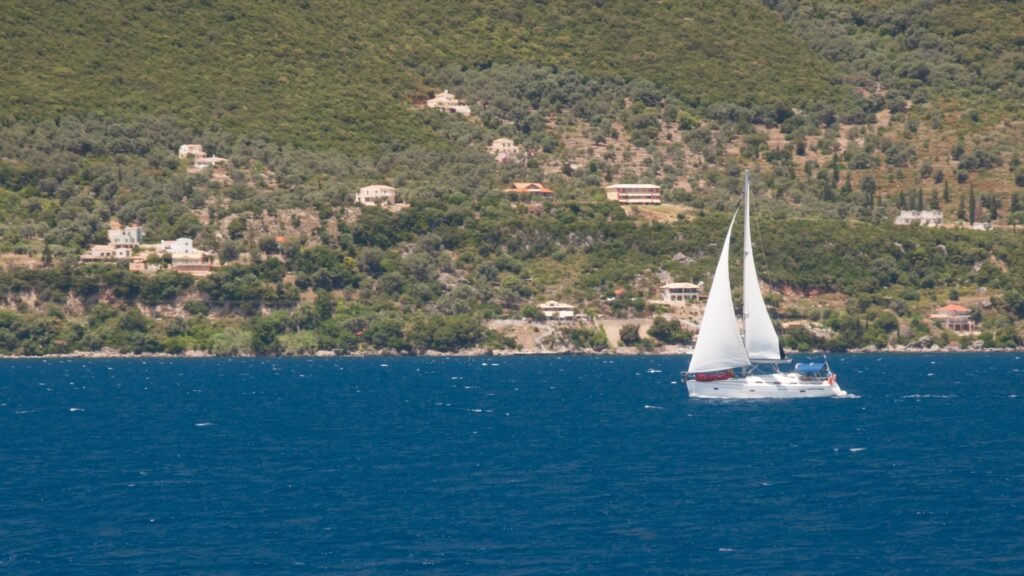
Yacht hauled out for survey and antifoul near Volos
A survey and a tidy antifoul pay for themselves at the negotiation.

Volos in Detail

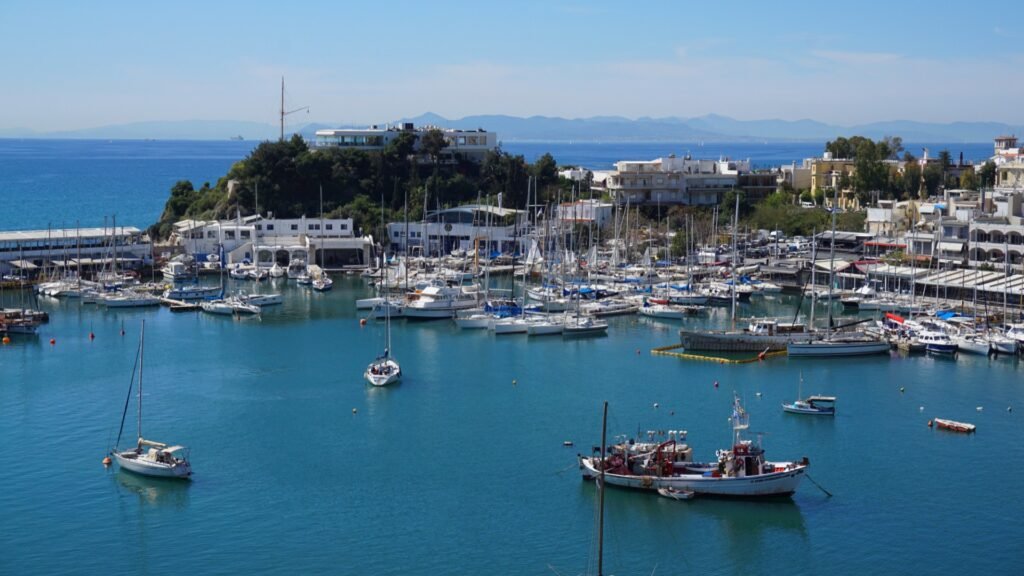
Volos sits at the edge of the Pagasetic Gulf, a working harbour rather than a marina resort, and that is part of its appeal if you are weighing up where to keep her before a sale. There are around three hundred berths here, a fair-sized fleet for a town of this scale, and the harbour has the look of a place that gets on with things rather than one dressed up for passing trade.

Walk the pontoons and you see a mix of Greek-flagged cruisers, older wooden boats tied up for the winter, and the occasional charter yacht waiting for its next booking. It is not a marina where every boat gleams identically. Buyers notice that, and it works in your favour, because a boat that stands out here does so on her own merits rather than by comparison with rows of similar new-build tonnage.

For a seller, Volos gives you practical reach. Haul-out and craning are available, both through O.L.V., which operates boat haul-out areas in the wider Volos district, and through the traditional karnagia that still work on hulls along this stretch of coast. No single yard name is published for the town, which simply reflects how the trade is organised here: several yards and traditional slipways share the work rather than one operator holding it all. For anti-fouling, osmosis treatment, engine work or rigging, you are not short of hands, and most of it is within a short drive of the berth.

Berthing itself runs year-round, so a boat can sit here through the winter without you worrying about a seasonal closure. In practice, most buyer viewings happen between April and October, when access is straightforward and the gulf is calm enough for a proper look at her lines and her berth. That gives a viewing window long enough to work with, without the pressure of a short high season.

Showing a boat in Volos is straightforward because the harbour is easy to reach, easy to park near, and easy to walk. We arrange private viewings by appointment once a buyer is vetted and their funds are confirmed, and Volos suits that approach well: quiet enough for an unhurried look, close enough to Athens and the Sporades to draw serious buyers rather than casual ones. Our commission is five per cent, payable on completion, with nothing asked of you upfront.
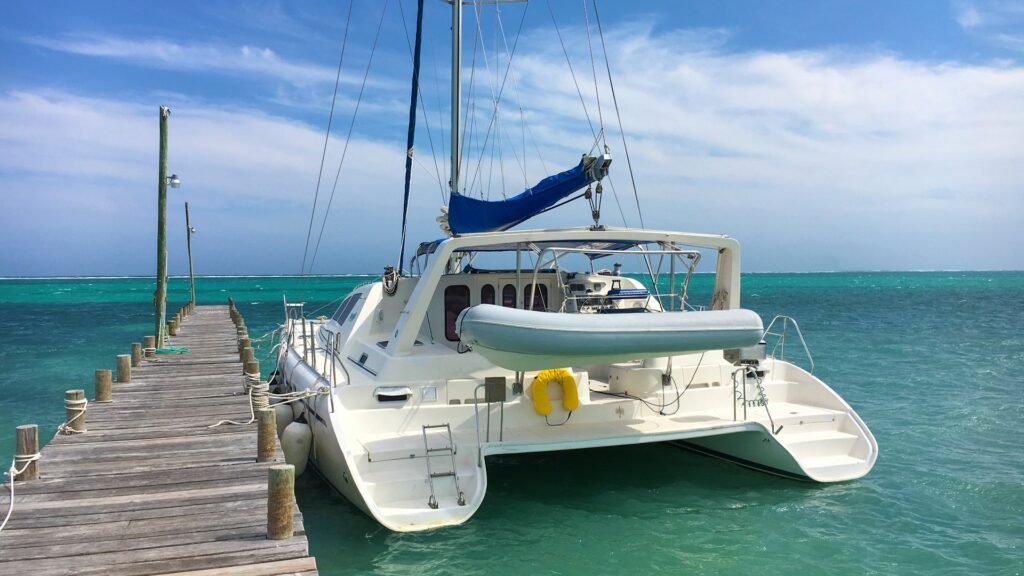
Berths and pontoons at Volos, Volos
Volos at Volos, Northern Greece & Sporades.

Volos: official website

Berthing, Beam and Draft at Volos

Volos offers around 300 berths, which puts it among the more substantial harbours on this coast rather than a small fishing mooring with a few visitor spaces bolted on. That scale matters when you are selling, because it widens the pool of buyers who can actually keep a boat here rather than simply admire her at a viewing.

Every berth in a harbour like this has a physical ceiling set by length overall, beam and draft, not by what the marina office would like to offer. A pontoon built for a ten metre yacht will not take a boat with three metres of beam or two metres of draft, however much a buyer wants the spot. When you list your yacht, the berth she currently occupies tells a buyer something concrete about what she can take on at Volos, and that is often more persuasive than a specification sheet.

A berth that transfers with the sale is a genuine asset in Greece, not a minor convenience. Demand for good berths generally outstrips supply along this coast, and a new owner who has to start again with an operator, a waiting list and an unfamiliar set of rules loses time and certainty at exactly the point they should be enjoying the boat. If your berth can pass to the buyer, say so plainly and early, because it changes the calculation for anyone comparing your yacht against another that comes without one.

Before you list, go back to your own paperwork and read it as a buyer would. Check whether the agreement is in your name personally or attached to the boat, whether it is transferable at all, and what notice or approval the operator requires before a new owner can take it on. If any of that is unclear, ask now rather than during negotiations, when a gap in the paperwork slows everything down and unsettles a buyer who has already had funds and identity checked before a private viewing.

Haul out is handled locally. O.L.V. states that boat haul-out areas and traditional karnagia operate in the wider Volos area, though no single yard name is published, which is worth mentioning to a buyer asking about winter arrangements.

DetailValue
Berths at Volosabout 300
Maximum length overall acceptednot published m
Alongside depthnot published m
Travel lift capacitynot published tonnes
Haul out and craningYes - O.L.V. states that boat haul-out areas and traditional karnagia operate in the wider Volos area; no yard name is published
SeasonYear-round berthing, but Apr-Oct in practice for buyer access
Nearest airportNea Anchialos National Airport (VOL)
Transfer to the berthabout 30 min (30 km per the airport operator); Thessaloniki SKG is roughly 2 h 15 min by road and is the practical year-round alternative
Brokerage fee5% of the sale price, payable on completion

Hellenic Coast Guard: local port authorities

Getting Buyers to the Boat: Flights, Ferries and Transfers

The boat lies at Volos, and the nearest airport is Nea Anchialos National Airport, coded VOL. The transfer from there is about 30 minutes, covering roughly 30 km according to the airport operator. For a buyer flying in from abroad, this is about as close as it gets to stepping off a plane and onto a tender.

Thessaloniki SKG is the practical year-round alternative when VOL does not have a convenient connection. By road it is roughly 2 hours 15 minutes to Volos, which is a fair stretch of the day but manageable if it is built into the itinerary rather than added as an afterthought.

We do not open a boat up on spec and hope someone wanders past. A viewing here means an appointment agreed in advance, with the boat unlocked, powered, and running before the buyer arrives rather than shut up and cold. Nothing is worse than a buyer standing on the pontoon while someone fumbles with battery isolators and bilge pumps.

One named broker attends, someone who knows the specification in detail rather than a general assistant reading from a listing sheet. That means being able to answer questions about engine hours, service history, and equipment without reaching for a laptop. The buyer gets proper time aboard, without another party waiting behind them checking their watch.

Buyers who have flown in rarely come to look at one boat. Given the cost and effort of the trip, they expect to see two or three vessels while they are in the area, often across different marinas or yards. That has a direct bearing on how a boat needs to be presented on the day.

If a buyer is comparing your boat against two others in the same afternoon, first impressions carry real weight. A boat that is open, clean, and ready when they step aboard reads as well kept. One that needs apologising for, or that is still being prepared when they arrive, puts you at a disadvantage before a single question has been asked.
Buyer arriving at Nea Anchialos National Airport (VOL) to view a yacht at Volos
Most buyers fly into Nea Anchialos National Airport (VOL) and reach the berth the same day.

Nea Anchialos National Airport (VOL): official website

The Range Selling Around Volos

If your boat lies in Volos or anywhere across Northern Greece and the Sporades, it helps to know what actually sells in this market, because it shapes how you should think about your own vessel and its buyer.

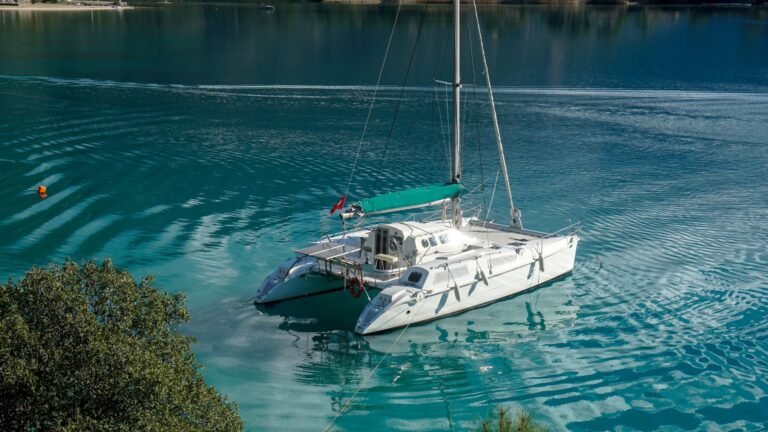
Cruising monohulls between ten and sixteen metres are the volume market here. They move steadily because the buyer pool is wide: private owners wanting a boat for the family, and increasingly buyers who plan to base her in the islands for the summer months. These buyers check engine hours, standing rigging age, and whether antifouling and osmosis treatment are up to date. If your boat sits in this band, expect real interest rather than a long wait.

Sailing catamarans hold their value better than most, and you will see both private buyers and charter operators competing for the right boat. Charter buyers are the more exacting of the two. They want service records that are complete, not summarised, and they will want to know the boat has not sat idle for long stretches between charters or private use.

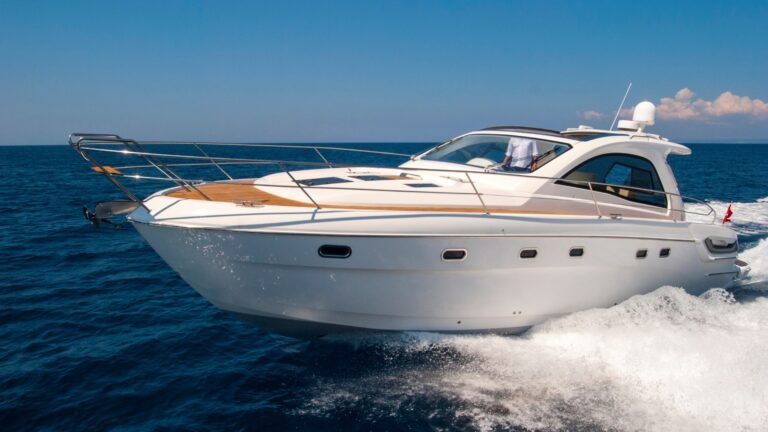
Motor yachts and flybridge boats attract a different buyer altogether, someone thinking about short hops between anchorages and entertaining guests on board rather than long passages. Fuel consumption at cruising speed, generator hours, and the condition of upholstery and deck fittings all get checked closely, since these boats are bought to be used hard in a short season.

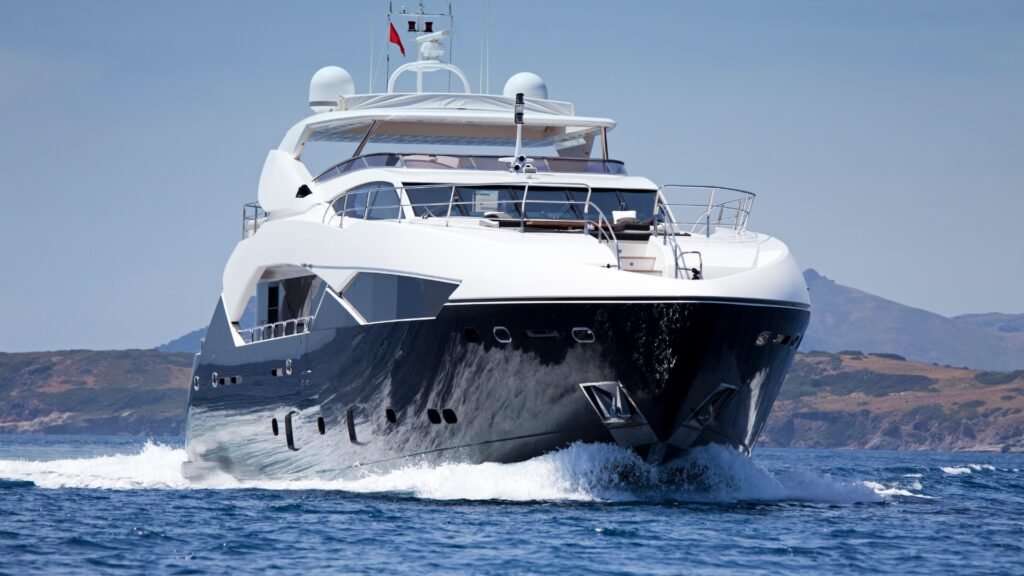
Larger yachts sell more slowly, and you should be prepared for that if yours falls into this category. The buyers who do come are serious. They arrive with finance arranged, sometimes with their own captain or surveyor already briefed, and they ask for full maintenance history before they will commit to a viewing. Patience matters more here than in any other part of the market, but the outcome tends to reward a well-documented boat.

Wherever your boat sits across these categories, the same principle applies: a buyer who is properly informed moves faster and negotiates less. Our current stock for this region follows below.
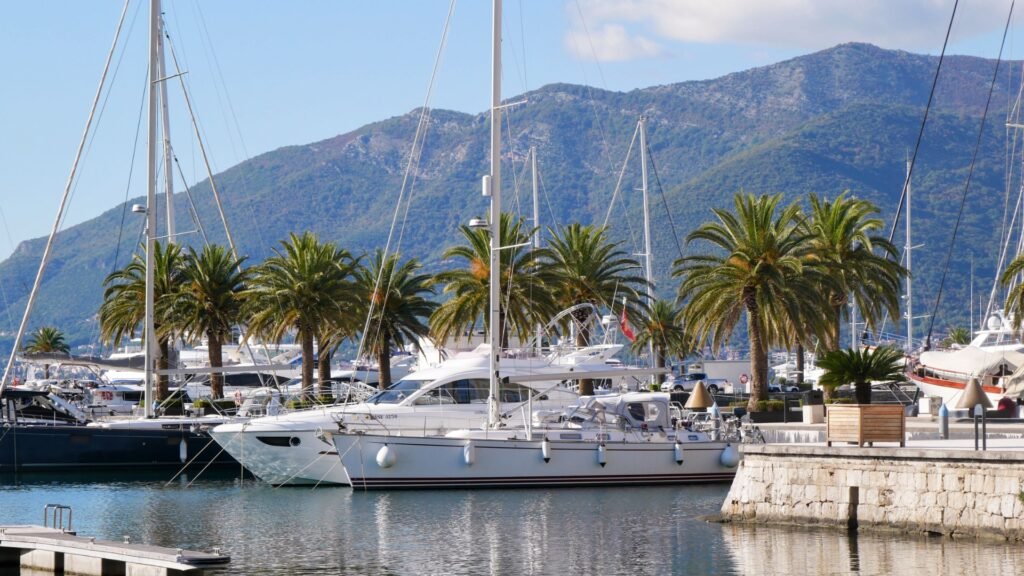
The range of yachts for sale around Volos
What is actually selling around Volos right now.

Where this page sits

Registering a Boat in Greece

A boat sold in Greece changes hands on paper as well as on the water. The buyer wants three things in order: a clean bill of sale, evidence that the previous register has released her, and documentation of her VAT status within the EU. Most owners selling here keep the flag she already wears; a change of flag is a choice, not an obligation, and it is usually driven by the buyer's residence rather than by where the boat is lying.

Where a buyer does want the Greek flag, private pleasure craft are entered through the local port authority and the paperwork is straightforward once the deletion certificate from the old register is in hand. Private boats cruising Greek waters also carry the TEPAI cruising contribution, which is calculated on length and paid monthly or annually. We handle the sequence so the two sides are never waiting on each other, and we tell you before you sign which document is going to be slowest.

Volos: Location and Fast Facts

Volos sits on the Greek mainland at the head of the Pagasetic Gulf, a sheltered body of water opening south toward the Aegean and the Sporades. From here it is a short passage to islands such as Skiathos, Skopelos and Alonnisos, making the gulf a natural gathering point for boats working the Northern Greece and Sporades coastline. The nearest airport is Nea Anchialos National Airport (VOL), roughly 30 minutes away by the airport operators own figure of 30 km. Thessaloniki International Airport (SKG) is the practical year-round alternative, around 2 hours 15 minutes by road, useful when flight schedules to Volos are limited outside the main season.

Boats For Sale Through Our Volos Office

Every listing below is handled by the same brokers who take on the boats owners bring us here: one named broker, full specification, professional photography and private viewings by appointment only.
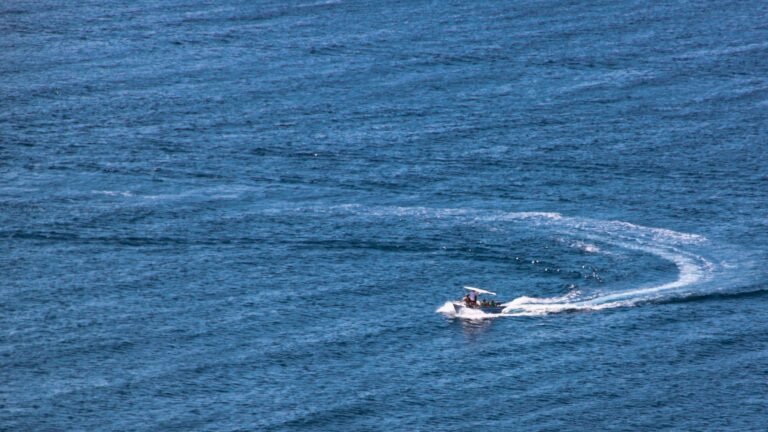
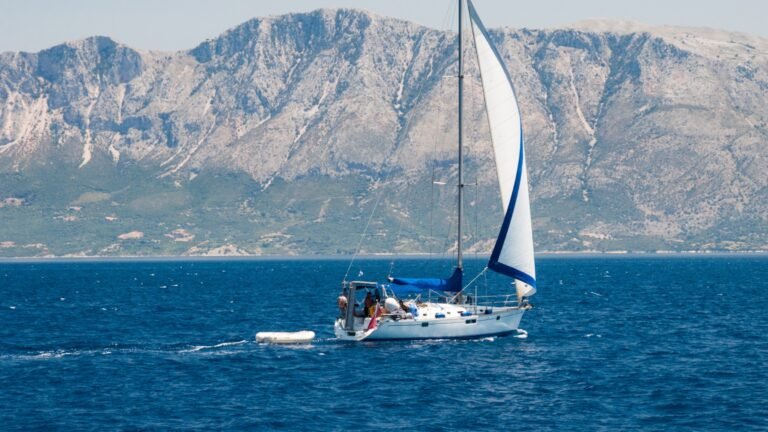
Azimut 78 Fly for sale 2011 — AOP

Azimut 78 Fly for sale 2011 — AOP

2011 · 24.5 m · Porto Carras Marina, Sithonia

EUR 1,800,000

Hallberg-Rassy 53 for sale 2002 — LA PEROUSE

Hallberg-Rassy 53 for sale 2002 — LA PEROUSE

2002 · 16.44 m · Leros

EUR 489,000

Lagoon 46 for sale 2020

Lagoon 46 for sale 2020

2020 · 13.99 m · Olbia

EUR 489,000

Sunseeker Manhattan 66 for sale 2019 — BRIGHT 7

Sunseeker Manhattan 66 for sale 2019 — BRIGHT 7

2019 · 20.8 m · Bodrum

EUR 1,650,000

See every yacht for sale through Yacht Brokers Greece

Sell Your Boat Volos: Frequently Asked Questions

What does it cost to sell my boat at Volos?

We charge 5% of the final sale price and it is payable only on completion. There is nothing to pay up front, no listing fee and no photography charge. If she does not sell, you owe us nothing at all.

Do I have to move the boat to sell her?

No. She stays exactly where she lies at Volos and buyers come to the pontoon. Moving a boat for a sale costs money, adds risk and rarely helps. Her own berth at Volos is the best showroom she has.

How long does it usually take to sell?

A correctly priced boat at Volos normally sells within three to six months, and most of that time is spent waiting for the right funded buyer rather than waiting for enquiries. Overpriced boats sit for a year or longer.

Who actually shows the boat to buyers?

One named broker handles your boat from listing to handover. The same person answers the enquiry, qualifies the buyer, meets them at the berth at Volos and runs the viewing. You are never passed around a call centre.

What paperwork do I need before listing her?

Proof of ownership, the registration document, the VAT status paperwork and invoices for any major works. Missing paperwork is the most common reason a sale collapses late. This is general information and not legal advice, so check your own position.

How do you decide what she is worth?

We look at recent completed sales of the same model, current asking prices, her condition, her hours and her equipment, then set a figure that attracts funded buyers rather than tyre kickers. A survey usually confirms that number rather than changing it.

Sell Your Boat Volos: Request a Free Valuation

Send us the make, model, year and berth number and we will come back with a realistic market figure, not a flattering one. Flat 5% commission on completion, no listing fee, no photography fee.

Value my boat+30 698 013 5656