Sell her from her own berth at Ermioni. One named broker, funded buyers only, private viewings by appointment. 5% on completion, nothing up front.
Request a valuationView yachts for saleHome › Yacht brokers Saronic & Argolic › Sell Your Boat Ermioni
Sell your boat Ermioni: the quickest route is to leave her exactly where she lies at Ermioni and let the buyers come to the pontoon.
Ermioni runs a year-round season, which matters more than most owners realise when timing a sale. A boat that can be viewed and handed over in January carries a different kind of appeal than one only available in high summer. Getting to the boat is straightforward too: from Athens International Airport Eleftherios Venizelos, it is roughly 60 minutes by metro Line 3 into Piraeus, then a ferry of about 2 hours 25 minutes to Ermioni. That journey is short enough to bring a serious buyer down for the day without turning the trip into an expedition.
Selling here works on the same terms as anywhere else we operate: 5 per cent on completion, nothing payable upfront, and no fee at all if the boat does not sell. One broker manages the process from valuation through to handover, so you are dealing with a single person who knows the boat and knows the answers when a buyer asks a direct question. Viewings are private, arranged by appointment, and only offered to buyers whose funds have already been checked. That keeps the number of people stepping aboard to those who are actually in a position to buy.
At Ermioni, a good number of the enquiries come from Greek owners already based in the marina who are trading up. They know the berth, they know the lift-out arrangements, and they are usually replacing one boat with another two or three years newer rather than changing region entirely. They go straight to the engine hours and the service history, and they walk away fast if the logbook has gaps or if antifouling has clearly been skipped a season.
Northern European buyers form the second group, and what they want is specific: a boat already lying in Greece so they can fly out and be aboard within the week, without the delay and cost of delivery from the Adriatic or further north. They inspect the rigging, the sail inventory and the state of the upholstery, since these are the things that tell them whether the boat has been used hard by charter or looked after by a private owner. They lose interest quickly if the paperwork is not in order or if a viewing cannot be arranged promptly.
Charter operators are the third group, and they are hunting for hulls that already carry Greek commercial paperwork and hold a berth at Ermioni, since that saves them a season of licensing and searching. Their attention goes to the layout, cabin count and any existing charter track record. A boat with no paperwork in place, or one needing structural work before it can be chartered, is one they will not pursue.
The fourth group is first time buyers moving up from something smaller, often their first yacht over ten metres. They focus on handling and manageability, asking whether the boat can realistically be sailed short-handed, and they tend to walk away from anything that feels like it needs a professional crew.
Ermioni runs a year-round season, which keeps enquiries steady rather than concentrated into a spring rush. Viewings and vetting continue through the winter months, so a listing here does not sit idle waiting for the season to open.
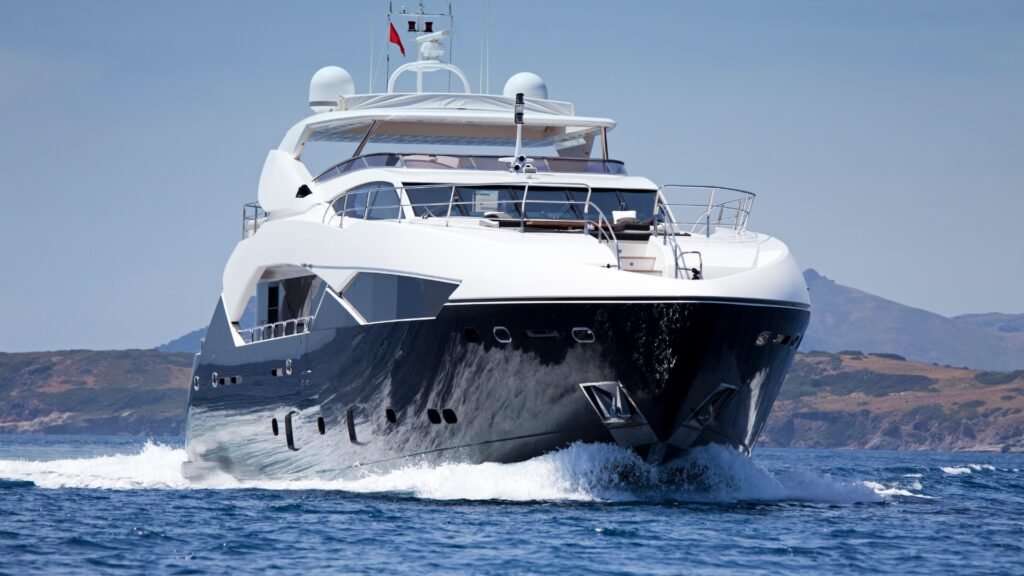
Selling a boat in Ermioni starts with a proper valuation, not a guess pulled from what is currently listed elsewhere. You need to know what similar boats have actually sold for, not what hopeful owners are asking for theirs. That means pulling recent completed sales, checking specification against specification, and giving you a figure grounded in transactions rather than wishful thinking.
Once the price is set, the work shifts to presentation. Professional photography and video are shot at the berth, in good light, showing the boat as she sits rather than as a stock image suggests she might. This is not a job for a phone camera between other errands. It takes a proper camera, a proper eye, and time you would otherwise have to find yourself.
The written listing has to do more than describe. It should answer the questions a serious buyer would otherwise ring you up to ask: engine hours, last antifouling, known issues, what is included and what is not. Getting this right cuts down the back and forth considerably.
From there, the listing goes out to the international portals where buyers are actually looking, not just a single website. Enquiries then get filtered. Anyone asking about a viewing has already had their interest and their funds checked, so you are not clearing your diary for people who were never going to buy. This is where yacht brokers Ermioni earn their keep, turning idle enquiries into serious ones before you ever hear about them.
Negotiation, survey, and the paperwork through to completion are handled as a single process, not three separate headaches landing on you at different times. You stop drafting emails, chasing documents, and explaining the same details to five different people. Commission is five per cent, paid on completion, with nothing asked for upfront.
The listings you see for boats lying at Ermioni tell you what other owners hope to get, not what their boats are worth. Anyone can publish a number. What matters is what has actually changed hands, on comparable boats, in comparable condition, in the recent past. That is the only evidence a valuation can be built on, and it is the evidence we use.
The year on the transom is a starting point, nothing more. Condition moves the number further than age does, and condition is not one thing but several. Engine hours matter more than the engine's age. The rig, the sails, and the canvas have a working life of their own, and a buyer's surveyor will price in whatever is close to the end of it. The electronics carry a generation, not just a purchase date, and a chartplotter or autopilot that is two generations behind will be treated as a cost the buyer has to absorb, not a feature they are paying for. A serviceable tender and outboard that come with the boat are worth real money to a buyer who would otherwise have to source both.
Location plays its own part. A boat lying in Greece, with her paperwork in order and a berth already secured, is simply worth more to a buyer than the identical boat sitting ashore somewhere he has to arrange transport to see. The saving in time, cost, and uncertainty is real, and buyers price it accordingly.
Setting the asking price too high does not protect the seller's number. It costs the seller money. A boat that sits unsold for months starts to look as though something is wrong with her, even when nothing is. Buyers who track listings notice the days elapsed, and they use it to negotiate harder. By the time the price is corrected downward, the boat has lost the advantage of being new to the market, and often ends up selling for less than a realistic asking price would have achieved from the outset.
It starts with a visit to the boat where she lies, in her own berth at Ermioni. We look her over as she is, not as a brochure might describe her, and give you an honest valuation based on her condition, her history and what similar boats are actually making in this market.
Once you are happy with that figure, we agree an asking price together and put it in writing. A listing agreement sets out what we will do, what you can expect from us, and confirms the terms before anything goes further.
Next comes the photography and video, shot at Ermioni itself, in daylight, showing the boat in her own setting rather than a generic marina backdrop. This is the material that will do the early work of interesting a buyer before they ever pick up the phone.
The listing then goes live and is pushed out to the international portals where serious buyers actually look. From there, every enquiry is filtered. We do not put unqualified names in front of you or waste your time with tyre kickers; only buyers who have shown their funds are in place are offered a private viewing appointment.
Viewings happen at the berth, by appointment, with the buyer vetted beforehand. If there is interest, an offer follows, and we handle the negotiation on your behalf, keeping you informed at each stage rather than leaving you to guess.
Once terms are agreed, a survey is arranged, along with a private viewing, both organised locally so there is no delay waiting for someone to travel out. Assuming the survey comes back clean and the buyer is satisfied, contracts are signed and the deposit is held properly, not paid to us directly but placed with the appropriate stakeholder.
From there we move to completion: funds transferred, the boat deregistered from her current flag, and handover arranged at Ermioni. Paperwork, keys and documentation pass to the new owner in an orderly sequence, with nothing left loose at the end.
On fees, there is one figure and one moment it applies. Our commission is five per cent, payable on completion. Nothing is payable up front, at any stage, for any part of this process.
A local broker replies with a realistic market figure, not a flattering one. No listing fee, no photography fee, flat 5% commission on completion.
We use these details only to value your boat and reply. No mailing list, no third parties. Prefer to talk? +30 698 013 5656.
Advertise your boat at Ermioni yourself and the first thing you will notice is the volume of enquiries that go nowhere. Most are unfunded, some are simply curious, and a handful are people who like looking at boats on a weekend rather than buying one. Sorting the serious from the rest takes time, and that time is yours.
Every enquiry that gets past the first message means opening her up, which usually means a trip down to the berth whether or not you are already there. You air her out, you tidy her, you wait. When the visitor turns out to have no real intention of buying, that afternoon is gone and there is nothing to show for it.
When you do reach someone who is serious, you are negotiating alone, and buyers who deal privately know it. Without sold comparables to point to, you have no ground to stand on when they push the price down, and they will push, because they know you have no other figures to argue from.
Some owners take a deposit at that point to feel secure. But a deposit held by an individual with no client account behind it protects nobody, least of all you, if the buyer changes his mind or the funds are disputed later.
Then comes the paperwork. Transfer of title and deregistration in Greece is exacting, and mistakes made here can leave you exposed long after the money has changed hands.
Meanwhile the boat still costs you. Berthing at Ermioni continues, insurance continues, antifouling and servicing continue, whether or not a buyer has been found. None of that pauses while you wait for the right person to come along.
A boat that sits unsold through a whole season costs her owner a good deal more than five per cent would have. The berthing fees, the insurance, the antifouling, the servicing, and the slow loss of value all add up, and they add up quietly, month after month, while the boat waits for someone who was never going to buy her.
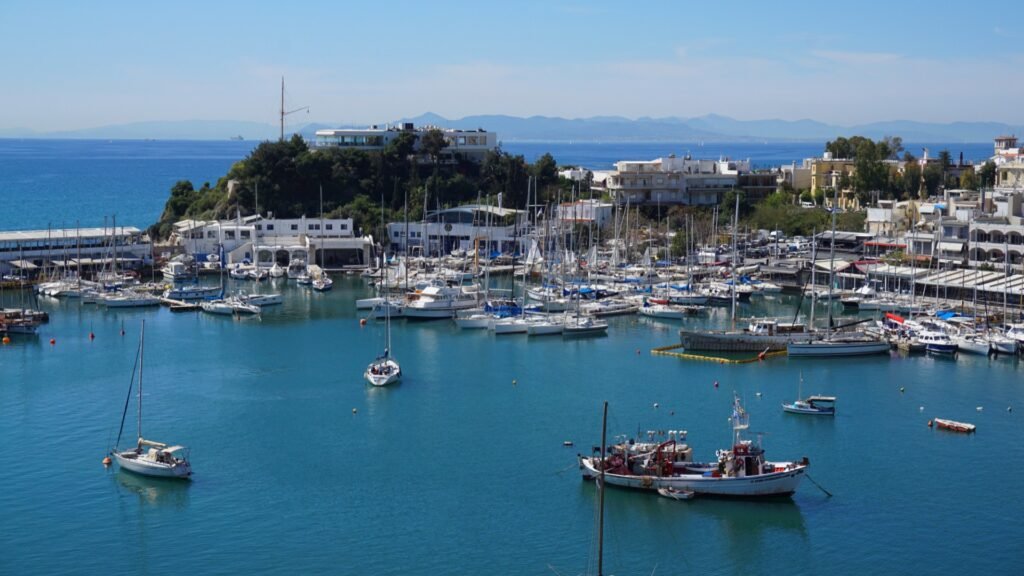
Once you accept an offer on your boat, the next step is a sale and purchase agreement. This sets out the price, the deposit, the conditions still to be met, and the date for completion. It is the document that turns a verbal understanding into something binding on both sides.
The deposit is paid into a client account, not handed to you directly. This protects the buyer's money until the conditions in the agreement are satisfied, and it protects you from any later dispute about what was paid and when. Neither party has one-sided control over those funds.
Most agreements are subject to survey and an on-the-water inspection. If either turns up a genuine defect, the two sides negotiate a price adjustment or agree on repairs before completion. This is worked out between buyer and seller, not decided unilaterally by either.
You will need to show clean title, meaning there is no outstanding finance or claim registered against the boat. Buyers, and their lawyers, will ask for this in writing before they commit funds. VAT status also needs to be evidenced, since a boat's standing within the EU affects its value and how it can be sold on.
Completion itself is marked by a bill of sale, the document that formally transfers ownership. Alongside it, the boat is deregistered from its current flag and registered under the new owner's chosen flag. These steps run in parallel with the paperwork, not after it.
If your boat is kept on a berth or mooring at Ermioni, the agreement covering that berth needs to be transferred or renegotiated with the marina as part of the sale. This is often overlooked until late in the process, so it is worth raising early.
Insurance changes hands on completion day itself. Your policy ends and the new owner's begins, so there is no gap in cover and no period where the boat is insured by two parties or by none.
This is general information, not legal advice.
Ermioni runs a year-round season, which changes how you should think about timing a listing. Buyers do not vanish in November and reappear in April the way they might in a strictly seasonal marina. Enquiries continue through the winter months, though the pace and the type of buyer shift.
The busiest period for genuine interest, rather than idle browsing, tends to build from late winter into spring, as buyers who intend to cruise that summer start looking in earnest. These are people who want to take delivery in good time to enjoy the boat rather than spend their first weeks of ownership still finding their feet. A listing that goes live in good time ahead of this window gives a buyer confidence that completion and handover can happen without a rush.
Photographs and viewings both benefit from being arranged when the light is clean and the water in the Saronic and Argolic is calm enough to show the boat properly. A boat photographed against flat water and a clear sky looks like what it is. The same applies to a private viewing, where a settled sea state lets a buyer judge handling and comfort without conditions getting in the way.
Once fine weather in the region begins to fall away later in the year, momentum for private viewings tends to fall away with it. A boat still listed at that point is more likely to sit until the following spring than to find a buyer over the winter. This is not a hard rule, since year-round activity means something can always happen, but it is the pattern brokers see repeatedly.
Summer conditions in the Saronic and Argolic are generally settled, with the kind of steady, moderate weather that suits leisurely cruising between islands and coastal anchorages rather than long open-water passages. This favours boats built for comfortable day sailing and short hops, with good deck space and easy handling, over boats designed primarily for heavy weather or ocean crossing. A seller whose boat suits this style of cruising is working with the market rather than against it.
Ermioni is a straightforward place to prepare a boat for sale, and it is worth doing the work properly before the first viewing rather than reacting to what a buyer notices on the day. Start with a deep clean, inside and out, and have the hull polished. This is the cheapest way to make a boat look looked after, and it sets the tone for everything a buyer sees afterwards.
Tenders, covers and canvas matter more than owners tend to think. A tender that has been left folded and damp, or bimini and cockpit covers that are stained and stiff, tell a buyer that maintenance has slipped even if the engines and systems are sound. Clean them, repair small tears, and if a cover is beyond saving replace it rather than presenting it as it is.
Get the engines serviced and keep the paperwork to show for it. A logbook with dated service records reassures a buyer far more than a verbal assurance that the engines run fine. At the same time, deal with the small faults a surveyor will list anyway: perished hoses, batteries that no longer hold charge, instruments that do not read correctly. These are inexpensive to put right now and expensive to explain later, once they appear as line items in a survey report.
Clear out personal belongings. Charts with someone else s pencil marks, family photographs, clothing in the cabins: all of it makes the boat feel like it belongs to somebody else, which is precisely the impression you do not want a buyer to form. A boat that is bare and clean is easier to imagine owning.
Where owners often waste money is on a full repaint or a new suite of electronics before listing. Both are expensive, and neither reliably returns its cost at sale. A buyer pays for a boat that is sound and honestly presented, not for cosmetic work done to impress rather than to inform.
On an older boat, a pre listing survey is money well spent. It tells you what a buyer s surveyor will find, and gives you the chance to fix it, price around it, or disclose it on your own terms. The surprises that kill deals are rarely the big ones. They are the small, undisclosed faults that surface after an offer has been made and accepted, when trust between the parties is at its most fragile.
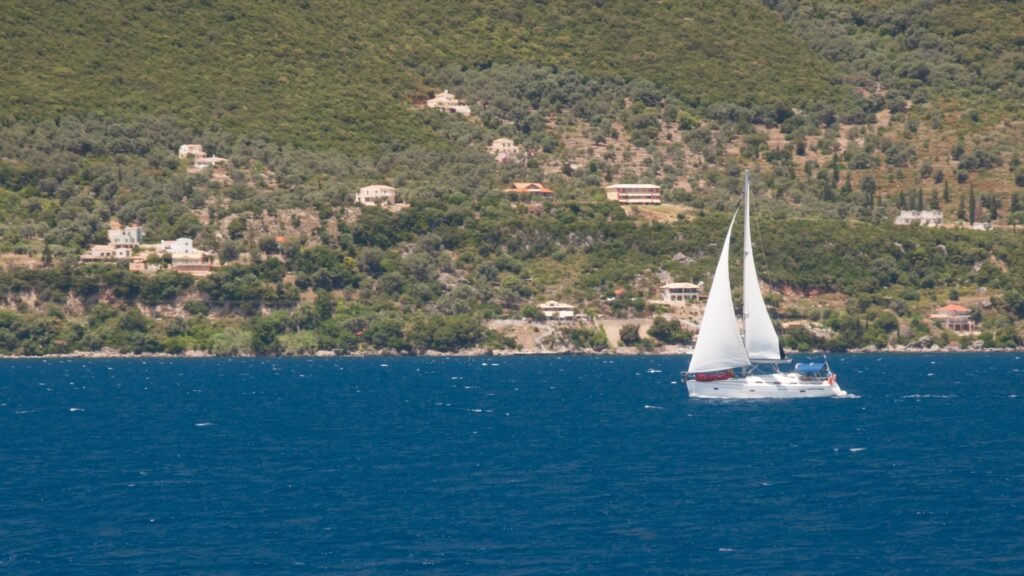
Ermioni lies in the Saronic and Argolic Gulf, a working harbour rather than a manufactured marina complex, and it keeps that character. The operator does not publish berth numbers, maximum length overall, alongside depth, or lifting capacity, so none of those figures can be quoted here, but the harbour operates year-round, which means a boat kept at Ermioni is never laid up out of season and can be reached, viewed, or moved at any time of year.
A buyer walking along the waterfront sees a working Greek harbour town, boats lying alongside a stone quay with the hills of the Argolic behind them, fishing craft and local ferries sharing the water with private yachts. It is not a marina lined with identical pontoons and a gate code. The setting is unpretentious, which tends to put people at ease before they have even stepped aboard, and it gives a realistic impression of what owning and using the boat in this part of Greece will actually be like.
For a seller, the harbour sits within reach of the usual trades a boat needs: local riggers, mechanics, and chandlery suppliers who work this stretch of coast regularly, along with agents used to handling paperwork and logistics for owners who are not always in the country. None of this depends on a single marina operator or a fixed service list. It is the kind of place where a phone call to the right person gets a job done, rather than a form filed with a facilities office.
What makes a boat easy to show here is largely a matter of access and calm. Ermioni is reachable by road and by ferry from Athens, so arranging a private viewing does not involve a long or complicated journey for a vetted buyer. The harbour itself is quiet enough that a boat can be inspected without the distraction of heavy marina traffic, and the surrounding town gives a buyer somewhere sensible to wait, eat, or stay if the appointment runs over more than one day. For an owner deciding where to keep a boat that may go to market, that combination of accessibility and quiet is worth more than any brochure description.
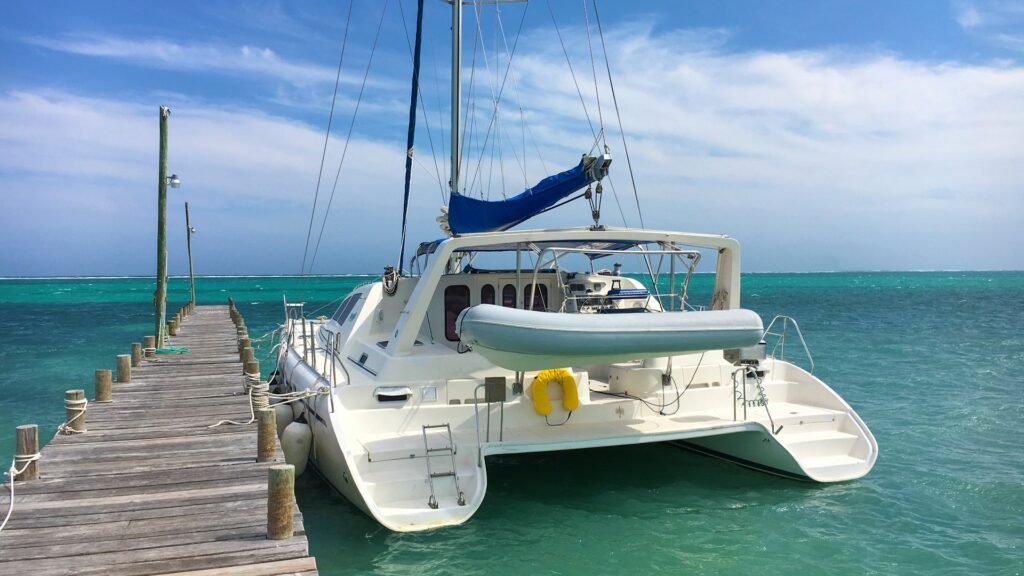
Ermioni does not publish its berth numbers, maximum length overall, alongside depth or travel lift capacity, so none of that can be quoted here. What matters for you as a seller is not the marina's own figures but how your yacht's dimensions interact with whatever space is actually available when a buyer comes to look at her.
Length overall, beam and draft are what decide whether a boat can lie in a given berth, not the other way round. A buyer with a wider or deeper vessel than yours may simply not be able to take on your mooring even if they want the boat, while a buyer with a smaller yacht may find themselves paying for space they do not need. This is why any serious enquiry starts with your actual figures set against whatever the marina or agent tells them is free, rather than against a brochure.
A berth that transfers with the sale is a genuine advantage in Greece, where good moorings are scarce and often held under long waiting lists or personal arrangements with a harbour authority or local agent. If your berth can pass to the new owner without them having to queue or negotiate afresh, that removes one of the biggest practical obstacles to a quick sale. Buyers who already know they can keep the boat exactly where she lies are far more likely to move to a private viewing once vetted, and to proceed with confidence once funds are confirmed.
Before you list her, check the paperwork behind your own arrangement. Confirm whether the berth is held in your name personally or attached to the vessel, whether it is transferable at all, and whether any local agent or harbour office needs to approve a change of owner. Check the term remaining on any agreement, whether fees are paid up to date, and whether there are conditions on length, beam or draft written into it that could rule out certain buyers before they even arrive. Gathering this now, rather than when an offer is on the table, keeps the sale moving and avoids surprises for either side.
| Detail | Value |
|---|---|
| Berths at Ermioni | not published |
| Maximum length overall accepted | not published m |
| Alongside depth | not published m |
| Travel lift capacity | not published tonnes |
| Haul out and craning | not published |
| Season | Year-round |
| Nearest airport | Athens International Airport Eleftherios Venizelos (ATH) |
| Transfer to the berth | ATH-Piraeus 60 min by metro Line 3 + ferry 2 h 25 min (Piraeus-Ermioni) |
| Brokerage fee | 5% of the sale price, payable on completion |
A buyer coming to see a boat lying at Ermioni will fly into Athens International Airport Eleftherios Venizelos (ATH). From there, the route is ATH-Piraeus 60 min by metro Line 3, followed by a ferry of 2 h 25 min from Piraeus to Ermioni. That is the whole journey, and it is worth setting out plainly to anyone planning a viewing, because it shapes the day. Once we know a buyer is coming, we agree a time in advance. We do not leave a viewing to chance or turn up hoping the boat is ready. The boat is opened, powered up and prepared before they arrive, not shut up and cold. Systems are running, the engine has been checked, and there is nothing for a buyer to imagine or take on trust. One named broker attends, and it is someone who knows the specification in detail, not a general assistant reading from a listing. They can answer questions on the spot about the engine hours, the refit history, the equipment fitted and anything else a serious buyer wants to know. The buyer has proper time aboard. There is no queue behind them, no second party waiting to come on next, and no sense of being rushed through. Buyers who have flown out for this rarely come to look at one boat alone. Given the cost and time of the trip, most plan to see two or three vessels while they are in the area, often across more than one location. That has a direct bearing on how a boat needs to be presented. If a buyer is comparing three boats in two days, the one that is ready, clean and properly explained will hold their attention longer than one that needs apologies or delay. A boat that is powered up, documented and easy to move around will simply compare better, regardless of what else is on their list. For an owner selling in Ermioni, this means thinking about the boat not as it sits day to day, but as it will be seen once, by someone who has come a long way and has other boats to measure it against.
Athens International Airport Eleftherios Venizelos (ATH): official website
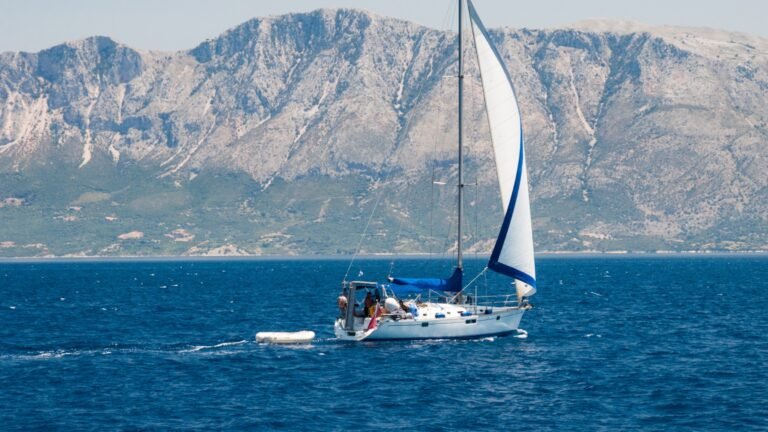
Around Ermioni, the volume market sits in cruising monohulls between ten and sixteen metres. These are the boats that actually move, season after season, because they suit the widest range of buyers and the widest range of budgets. Most go to private owners who plan to sail the Saronic and Argolic themselves, often with family, and who want a boat they can handle without a permanent crew.
Buyers in this bracket check the standing rigging, the state of the sails, and whether the engine hours match the service history. They look closely at the antifouling and the condition of the hull below the waterline, and they ask about osmosis even when there is no sign of it. A well-kept boat with clear paperwork sells faster than one that merely looks tidy in photographs.
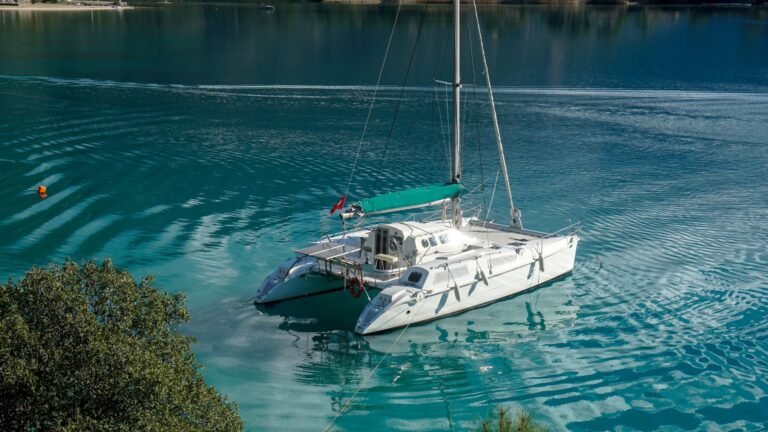
Sailing catamarans hold their value better than most other categories in this market, and they draw two quite different sorts of buyer. Private owners want the stability and the space, particularly for time aboard with children or older guests. Charter operators buy with occupancy in mind, and they check galley capacity, cabin layout, and how easily the boat can be turned around between bookings.
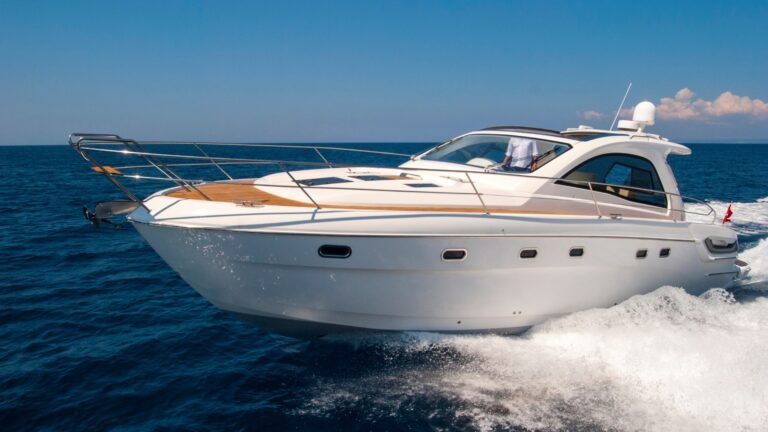
Motor yachts and flybridge boats are bought for a different rhythm of use. Owners here are thinking about short hops between anchorages, lunch stops, and entertaining guests on board rather than long passages. They ask about fuel burn at cruising speed, generator hours, and how the boat handles at rest, since much of its life will be spent moored rather than under way.
Larger yachts move more slowly through this market, and there is no point pretending otherwise. The buyers who do come forward tend to be serious, and they arrive having already done their homework. They ask for full survey history, class certification where it applies, and a clear account of any refit work, and they expect answers rather than reassurance.
In every category, the boats that sell well are the ones where the paperwork matches the boat in front of the buyer. Vague answers slow a sale down regardless of how the vessel looks at anchor.
A boat sold in Greece changes hands on paper as well as on the water. The buyer wants three things in order: a clean bill of sale, evidence that the previous register has released her, and documentation of her VAT status within the EU. Most owners selling here keep the flag she already wears; a change of flag is a choice, not an obligation, and it is usually driven by the buyer's residence rather than by where the boat is lying.
Where a buyer does want the Greek flag, private pleasure craft are entered through the local port authority and the paperwork is straightforward once the deletion certificate from the old register is in hand. Private boats cruising Greek waters also carry the TEPAI cruising contribution, which is calculated on length and paid monthly or annually. We handle the sequence so the two sides are never waiting on each other, and we tell you before you sign which document is going to be slowest.
Ermioni sits on the Argolic side of the Saronic and Argolic coastline, a small peninsula town facing open water rather than tucked into a gulf. It looks out onto the sea that links the Saronic islands to the Argolic Gulf, with a working harbour that has sheltered boats long before yachting arrived. From here, a short passage puts you within reach of the wider Saronic cruising ground, the kind of stretch where island hops are measured in hours rather than days. The town itself is modest and unpolished, which is part of its appeal to owners who want a base without the crowds of the busier Saronic ports. Getting here is straightforward. The nearest airport is Athens International Airport Eleftherios Venizelos, known by its code ATH. From there, the route into Piraeus by metro Line 3 takes roughly 60 minutes, and the ferry from Piraeus to Ermioni adds around 2 hours and 25 minutes. It is not a five-minute transfer, but it is a manageable one, and for many owners the extra hour is a fair trade for a quieter harbour and a less frantic stretch of coastline. A map follows, showing exactly how Ermioni sits within that wider geography.
We charge 5% of the final sale price and it is payable only on completion. There is nothing to pay up front, no listing fee and no photography charge. If she does not sell, you owe us nothing at all.
No. She stays exactly where she lies at Ermioni and buyers come to the pontoon. Moving a boat for a sale costs money, adds risk and rarely helps. Her own berth at Ermioni is the best showroom she has.
A correctly priced boat at Ermioni normally sells within three to six months, and most of that time is spent waiting for the right funded buyer rather than waiting for enquiries. Overpriced boats sit for a year or longer.
One named broker handles your boat from listing to handover. The same person answers the enquiry, qualifies the buyer, meets them at the berth at Ermioni and runs the viewing. You are never passed around a call centre.
Proof of ownership, the registration document, the VAT status paperwork and invoices for any major works. Missing paperwork is the most common reason a sale collapses late. This is general information and not legal advice, so check your own position.
We look at recent completed sales of the same model, current asking prices, her condition, her hours and her equipment, then set a figure that attracts funded buyers rather than tyre kickers. A survey usually confirms that number rather than changing it.
Send us the make, model, year and berth number and we will come back with a realistic market figure, not a flattering one. Flat 5% commission on completion, no listing fee, no photography fee.
Value my boat+30 698 013 5656