Sell her from her own berth at Ermoupoli, Syros. One named broker, funded buyers only, private viewings by appointment. 5% on completion, nothing up front.
Request a valuationView yachts for saleHome › Yacht brokers Cyclades › Sell Your Boat Syros
Sell your boat Syros: the quickest route is to leave her exactly where she lies at Ermoupoli, Syros and let the buyers come to the pontoon.
Ermoupoli's marina sits on Syros, in the Cyclades, and holds around 100 berths, busy with local and visiting yachts. The season runs year-round, so a listing here is not tied to a narrow summer window. Syros Island National Airport, JSY, lies about five minutes from the town, according to the Hellenic Civil Aviation Authority, which puts the airport itself two kilometres from Ermoupoli. That proximity matters when a buyer wants to fly in, view the boat, and fly out the same day.
Selling through us costs five per cent, payable on completion, with nothing due upfront. One broker manages the sale from valuation through negotiation to handover, so you deal with a single point of contact throughout. Viewings are private, arranged by appointment only, and reserved for buyers whose funds have already been verified. That approach protects your time and keeps the process orderly from the first enquiry to the final signature.
Greek owners already based at Ermoupoli tend to move within the same stretch of water, trading up from one boat to the next without leaving the marina community they know. They go straight to the engine hours and the service history, since they are usually buying a bigger version of something they already understand well. What sends them away fastest is a logbook with gaps, or a broker who cannot say who did the last major service.
Northern European buyers are looking for a boat already lying in Greece so they can fly out and be aboard within the week, rather than losing a season to transport or a long delivery passage. They check the berth and the paperwork before anything else, because the whole appeal is stepping straight on and heading out. A boat that looks right in photographs but comes with an unclear ownership history or a lapsed flag registration loses them almost immediately.
Charter operators are hunting for hulls that already carry Greek commercial paperwork and hold a berth, since both save them months of administration before a boat can earn. They go through the survey and the charter licence status line by line, and they walk if either is uncertain or if the layout will not work for guest turnover. Cosmetic condition matters far less to this group than paperwork that is clean and current.
First time buyers stepping up from something smaller inspect the boat the way they would a car, looking hard at how she handles and how forgiving the systems are. What puts them off is complexity they cannot picture managing alone, or a broker who cannot explain the boat in plain terms.
The season at Ermoupoli runs year-round, which keeps enquiries arriving steadily rather than bunching around the spring rush seen elsewhere. That spread suits sellers, since a boat listed here is not left waiting for one narrow window to bring the right buyer forward.
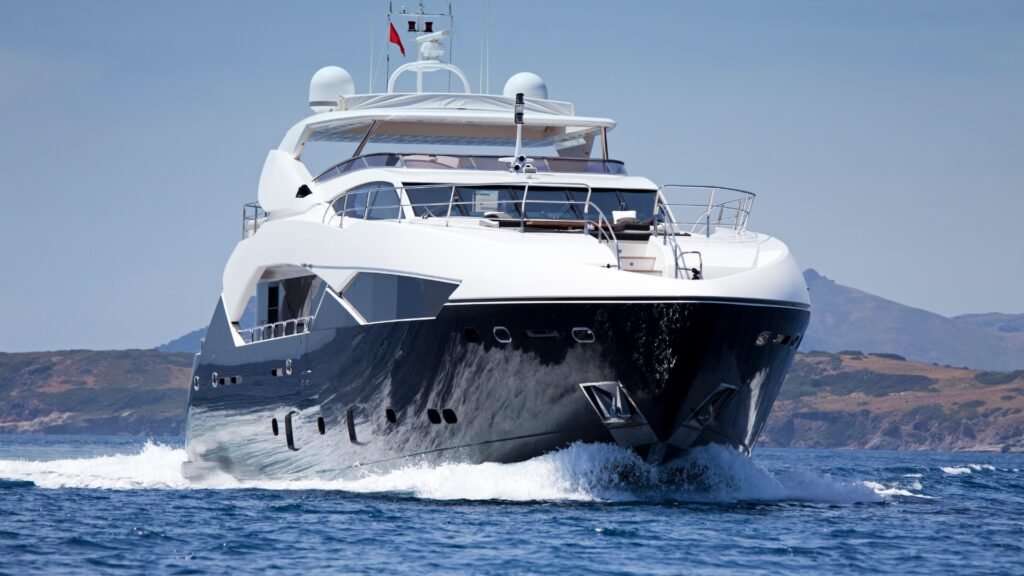
The work starts with a valuation, and a valuation is only as good as the data behind it. You look at what similar boats have actually sold for over recent months, not what someone else is still hoping to get for a boat that has sat unsold for a year. That figure gives you a realistic asking price from the outset, which saves months of drift later.
Photography and video are shot at the berth, on the boat as she actually is, not in some generic marina abroad. Buyers judge a listing in seconds, and a poorly lit, badly framed set of images loses their interest before they have read a word. The written listing then does the job a good broker would do in person: it answers the questions about engine hours, service history, layout and equipment before the buyer has to ask them.
That listing goes out to the international portals where serious buyers actually look, which is a wider reach than most owners can manage on their own. Enquiries then get filtered. Among yacht brokers Syros deals with a good number of tyre kickers and time wasters, and part of the job is separating those from buyers whose funds have been checked and confirmed. Only those buyers are given a private viewing by appointment.
From there the broker runs the negotiation, coordinates the survey, and manages the paperwork through to completion, keeping both sides moving and dealing with the queries that come up along the way. You are not fielding calls from strangers, not standing at the boat answering the same questions repeatedly, and not chasing solicitors or surveyors for updates. Commission is five per cent, payable on completion, with nothing due upfront.
What you see advertised for boats like yours lying at Ermoupoli tells you what sellers hope for, not what buyers pay. Asking prices published online are aspiration, nothing more. The only figures worth anything are the ones that actually changed hands, and those live in completed sale records, not in the brochure you are reading on a broker's website.
Once you accept that, the valuation of your boat starts with condition rather than with the year stamped on the transom. Two boats built in the same season can sit a long way apart in value once you look properly. Engine hours matter more than most owners expect, because a low-hours engine with a clean service history removes a buyer's biggest worry. The age of the rig, the sails, and the canvas work the same way. Tired sails and sun-worn covers tell a buyer there is spending ahead, and they price that in before they have even asked.
The generation of the electronics counts too. A chartplotter and instruments that are two or three generations behind current models signal a refit bill that a buyer will deduct from any offer, whatever the asking price says. A serviceable tender and outboard sitting on the davits, ready to use, moves the number further than most owners realise, because the alternative is the buyer sourcing and fitting their own.
Location and paperwork carry real weight as well. A boat lying in Greece already, with clean title, VAT status resolved, and a berth secured, is worth more to a buyer than an identical boat sitting ashore somewhere that has to be reached, inspected, and then moved. That convenience has a value, and it belongs in the number.
Set the asking price too high and the boat simply sits. Serious buyers watch how long a listing has been live, and a stale listing reads as a boat with a problem, whether or not one exists. Every extra week ashore adds mooring fees, depreciation, and doubt. A price that reflects the boat as she actually is, not as the owner remembers her, sells faster and nets more.
It starts with someone coming to see her where she lies, in her own berth at Ermoupoli. We look at the boat as she is, not as a brochure might describe her, and we give you a valuation based on what similar boats have actually sold for and what condition and equipment she carries. No guesswork, no flattery.
Once you are happy with the figure, we agree an asking price together and put it in writing. A listing agreement sets out what we will do, what you can expect from us, and the terms under which she goes to market.
From there we arrange photography and video, shot at Ermoupoli itself, showing the boat in her berth and under way if conditions allow. These images and footage go into the listing, which we publish and push out to the international portals where serious buyers actually look.
Enquiries then come in, and we filter them. Anyone asking to view has already had to show their funds are in place. We do not put you or the boat through the disruption of casual lookers.
Viewings happen privately, by appointment, at the berth. If a buyer is interested after seeing her, they make an offer, and we handle the negotiation between you until a price is agreed.
Once terms are settled, survey and private viewing are arranged locally, giving both sides confidence in the boat's condition and performance before anything is finalised.
A contract is then signed, and the deposit is held properly, in the way these things are meant to be handled, protecting both buyer and seller until completion.
Completion itself involves deregistration and the formal handover of the vessel, at which point the transaction is done and the boat passes to her new owner.
Throughout all of this, our fee is five per cent, payable only on completion. Nothing is payable up front.
A local broker replies with a realistic market figure, not a flattering one. No listing fee, no photography fee, flat 5% commission on completion.
We use these details only to value your boat and reply. No mailing list, no third parties. Prefer to talk? +30 698 013 5656.
Selling privately at Syros looks like it saves you money until you count what it actually takes out of your season. Most of the enquiries that come in through noticeboards or word of mouth are not funded and never will be. You spend weeks answering messages from people who are curious, comparing boats, or simply passing time, and very few of them have the money behind them to complete.
Each serious looking enquiry still means opening the boat. That means travelling down to Ermoupoli, airing her out, running the engines, tidying the cabin, and doing it again for the next person who was never going to buy. Your time has a cost even when no one writes about it on the invoice.
When a buyer does turn serious, they know you have no sold comparables to point to. Without a broker holding recent completed sales at similar length and age, you are negotiating from a position with no evidence behind your asking price, and buyers use that against you on every viewing.
Some owners take a deposit directly, with no client account standing behind it, which leaves both sides exposed if a deal falls apart. Title transfer and deregistration paperwork in Greece carries its own risk if it is handled without experience, and a mistake there can delay or unpick a sale after money has already changed hands.
Meanwhile the boat sits at Ermoupoli costing you money regardless of whether she sells. Berthing, insurance, antifouling, and routine servicing continue whether or not a buyer appears this month or next. A boat that sits unsold through a whole season costs her owner far more in these running costs than a five per cent commission on completion, paid only once the sale is done.
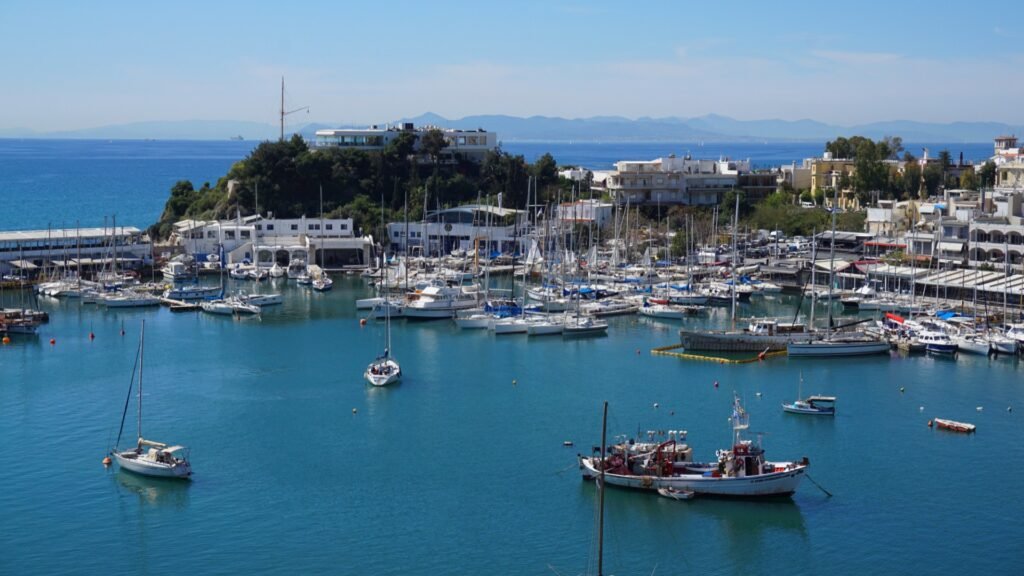
Once you accept an offer on your boat in Ermoupoli, the buyer's broker draws up a sale and purchase agreement. This sets out the price, the boat's details, the conditions attached to the sale, and the date for completion. You and the buyer both sign it, and from that point the transaction has a fixed shape and a timetable.
The buyer pays a deposit once the agreement is signed. That money goes into a client account held by the broker, not into your hands and not into the buyer's. It stays there until completion, or until it is returned or forfeited under the terms of the agreement, so neither side is exposed while the remaining checks are carried out.
Most agreements are subject to survey and private viewing. The buyer arranges an independent survey and a private viewing at Ermoupoli. If the surveyor finds defects, you and the buyer negotiate a settlement, usually a reduction in price or an agreement that you repair the fault before completion. Either party can walk away if no agreement is reached, and the deposit is returned to the buyer.
Before completion you provide proof of clean title, confirming there is no outstanding finance or claim against the boat, along with evidence of her VAT status within the EU. A bill of sale is prepared, transferring ownership from you to the buyer. Your boat is deregistered from her current flag and registered under the buyer's chosen flag, and the berth or mooring agreement at Ermoupoli is transferred or reassigned to the new owner, depending on what the marina allows.
Insurance changes hands on the day of completion itself. Your cover ends and the buyer's cover begins from that date, so the boat is never left without insurance between owners.
This is general information, not legal advice.
Ermoupoli, on Syros, runs a Year-round season, and that phrase carries a specific meaning for anyone weighing up when to bring a boat to market. It does not mean buyers are equally active in every month. It means the marina itself never closes, moorings remain serviced, and a boat can be shown, inspected and handed over in December as readily as in June, which matters when a sale needs to complete outside the summer rush.
In practice, interest builds through the winter and into early spring, as buyers who have spent the summer chartering or looking at boats elsewhere start to plan a purchase in earnest. Most want delivery in time for the new season, which puts pressure on sellers to have the boat listed, photographed and ready for a private viewing well before the Cyclades fill up with traffic. A boat that comes to market in late spring is competing for attention against a season already under way.
The boat shows best in photographs and at a private viewing in the shoulder months, when the light is clean, the marina is calmer, and a prospective buyer can walk the decks and go through the systems without the distraction of a busy harbour. Once the height of summer passes and the Cyclades quieten again into fully autumn, enquiries thin out sharply, and a boat left on the market at that point is likely to sit until the following spring.
Summer conditions across the Cyclades are defined by the meltemi, a sustained northerly that builds through the day and can hold for several days at a stretch. Anchorages and passages between islands are exposed rather than sheltered, and this shapes what sells here. Solid, well-found boats with dependable ground tackle, strong rigging and manageable sail plans, or motor yachts with real sea-keeping ability, hold their value and their buyers in this market far better than boats built for calmer, more enclosed waters.
Ermoupoli has good yards and enough skilled hands nearby that getting a boat ready for sale is straightforward, provided you spend on the right things. A deep clean, inside and out, is the first and cheapest job that makes the biggest difference. A polished hull, done properly rather than rushed, changes how a boat photographs and how it feels the moment a buyer steps aboard.
Tenders, covers and canvas matter more than owners expect. A buyer reads these as a proxy for how the whole boat has been looked after. If the biminis are faded and the tender cover has gone stiff and grey, that impression spreads to the engine room whether it is deserved or not.
Get the engines serviced and keep the paperwork. A logbook with stamped services and dated invoices tells a buyer more than any amount of talking. Replace perished hoses, tired batteries and instruments that no longer read correctly. A surveyor will list these anyway, so there is no advantage in leaving them for someone else to find and price down.
Clear your belongings out of lockers, cabins and the saloon. A buyer needs to see the boat, not your family holidays. Empty spaces let people imagine their own gear aboard, which is most of what a viewing is for.
What is not worth doing is a full repaint. On a boat of any age it rarely returns what it costs, and a well prepared existing finish will do the job just as well in front of a buyer. The same goes for a new suite of electronics. Buyers expect to budget for their own updates and rarely pay extra for someone else's choices.
If the boat is older, have a pre listing survey done before you go to market. It costs money now, but it means there are no surprises once you have an offer on the table. A surprise at that stage is what kills deals, not the issue itself. Buyers can live with a known problem and a fair price. What they walk away from is finding something the seller did not mention.
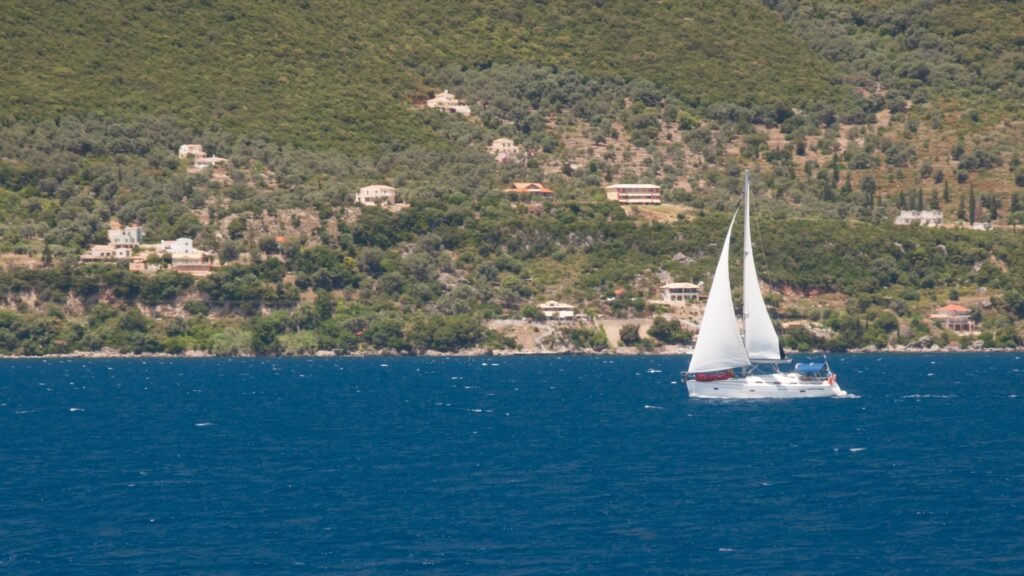
Ermoupoli sits on Syros in the Cyclades, and the harbour there gives you a berth in a working Greek town rather than a resort marina built for the season. It holds around a hundred berths, and it operates year-round, so a boat lying here is never mothballed for half the year waiting for a viewing window. That matters when you are trying to sell, because a buyer can be shown the boat in November as easily as in July. Walk the pontoons and you see a mixed fleet: local fishing boats, sailing yachts, motor cruisers, and the odd classic that has been kept on the island for years. It does not have the polish of a purpose-built superyacht marina, and that is part of its appeal. Buyers who know the Cyclades recognise Ermoupoli as a proper harbour town, not a stage set, and that reads as credibility rather than compromise. Ermoupoli is the capital of Syros and one of the larger towns in the Cyclades, so a seller has genuine trades within reach rather than a single contracted yard. Riggers, mechanics, electricians and shipwrights work out of the town, and there are chandleries and hardware suppliers who deal with boat owners as a matter of course, not as a novelty. If a survey turns up work to be done before completion, you are not shipping parts in from Athens and waiting a week for a technician to arrive. The town itself has ferry connections to Piraeus and to other islands, which makes it straightforward for a vetted buyer to get here for a private viewing by appointment. Ermoupoli also has the everyday infrastructure of a real town, banks, a hospital, shops that stay open outside the summer months, so there is nothing seasonal or improvised about doing business here. For a seller, that combination, year-round access, a working harbour with a genuine trade base, and a town that functions in January as well as August, means the boat is easy to present properly and easy to move on quickly once a buyer is ready. We arrange every viewing directly, after funds are confirmed, and we work on the same basis wherever your boat is lying: five per cent commission on completion, nothing charged up front.
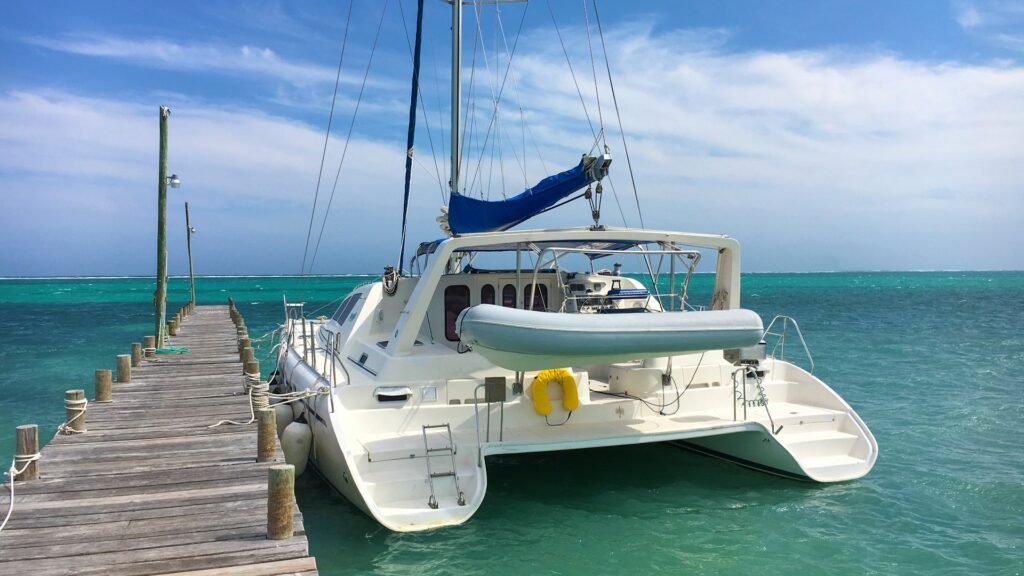
Ermoupoli offers around 100 berths, and that number matters more than it first appears. It tells you this is a working harbour with a finite allocation, not an open marina where space can be found to fit almost anything. If you are selling, the size of that pool shapes who can realistically berth your boat there once she changes hands.
Length overall, beam and draft are what decide which of those 100 berths a boat can actually take. A berth built for a 12 metre yacht will not accommodate one considerably longer, and a wide beam can rule out a slot even when the length would otherwise fit. Draft works the same way against the depth alongside, whatever that happens to be for the specific berth in question. These three figures together, not the class of boat or her reputation, are what a harbour master checks before allocating space.
This is why a berth that transfers with the boat is worth stating plainly in a listing rather than treating as a minor detail. In Greece, berths are not always guaranteed to a new owner simply because they have bought the vessel that occupied it. Where a berth does transfer, you are removing one of the more uncertain steps in a Greek yacht purchase, and that has a direct bearing on how a serious buyer values the whole transaction.
Before you list, go back to your own berthing or mooring agreement and read it as a buyer would. Check whether the agreement is in your name or the boat's, whether it is transferable at all, and what conditions or notice periods apply if it is. Confirm who you would need to contact, and how long that process typically takes, so you can answer the question the moment it is asked rather than after an offer is already on the table.
None of this needs to be dressed up. A buyer viewing a boat here by appointment, once vetted and with funds confirmed, will ask about the berth early. Having a clear, accurate answer ready is part of presenting the boat properly.
| Detail | Value |
|---|---|
| Berths at Ermoupoli, Syros | about 100 |
| Maximum length overall accepted | not published m |
| Alongside depth | not published m |
| Travel lift capacity | not published tonnes |
| Haul out and craning | not published |
| Season | Year-round |
| Nearest airport | Syros Island National Airport Dimitrios Vikelas (JSY) |
| Transfer to the berth | about 5 min (HCAA lists the airport 2 km from Ermoupoli) |
| Brokerage fee | 5% of the sale price, payable on completion |
Your boat lies at Ermoupoli, on Syros, and the practical question for any serious buyer is how quickly they can stand on her deck. The nearest airport is Syros Island National Airport Dimitrios Vikelas, JSY. The transfer from there is about 5 min, and the HCAA lists the airport as 2 km from Ermoupoli. That is a short hop by any measure, and it means a buyer can land, reach the boat, and be back at the airport within a working day if that is what their schedule demands. We do not leave that short distance to chance. A viewing is arranged by appointment, agreed in advance with the buyer once they are vetted and their funds are confirmed. The boat is opened ahead of their arrival, systems powered, cushions off if she has been shut up, engine ready to run. Nobody wants to stand on a dead boat while a broker fiddles with breakers. One named broker attends, someone who knows the specification cold, the history, the maintenance record, the answer to the question the buyer has not yet asked. That person stays for the viewing and does not have another buyer waiting behind them. Time on board is unhurried, because a buyer who has flown to Syros to see a specific boat deserves your full attention, not a slot between two other appointments. Buyers who fly in rarely come for one boat alone. A trip to Syros is a cost in time and money, so they build an itinerary, two or three boats, sometimes across more than one island, comparing hull for hull, spec for spec, in the same few days. That means your boat is not being judged in isolation. It is being judged against whatever else is on their list that week, and first impressions on stepping aboard carry real weight. For you, the owner, that means presentation is not a nicety. A boat that starts on the first turn of the key, with clean bilges and a tidy engine bay, tells a buyer something before a single word is spoken. When they walk off your boat and onto the next one that afternoon, you want the comparison to work in your favour.
Syros Island National Airport Dimitrios Vikelas (JSY): official website
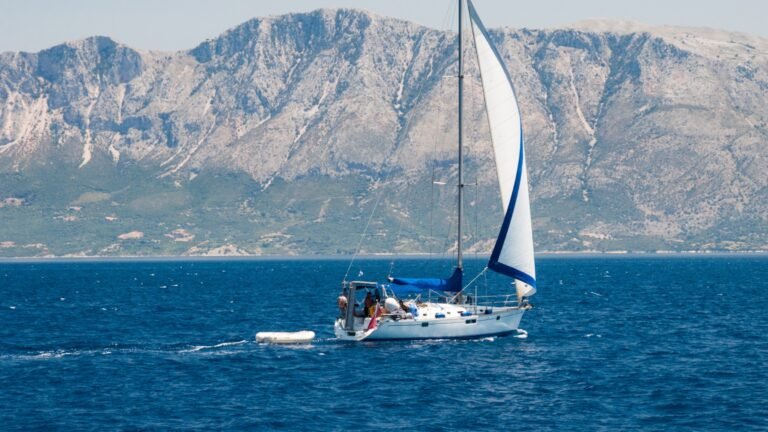
Most of the activity around Syros and the wider Cyclades sits in the ten to sixteen metre cruising monohull band. These are the boats that actually move, season after season, because the buyer pool is wide and the boats themselves suit the sailing here: short hops between islands, manageable crew, easy handling under sail or motor. Buyers are usually private owners planning to sail with family or a small group of friends, sometimes stepping up from a smaller boat they have outgrown. They check the rigging age, the state of the sails, the engine hours, and whether the antifouling and osmosis history are documented rather than described.
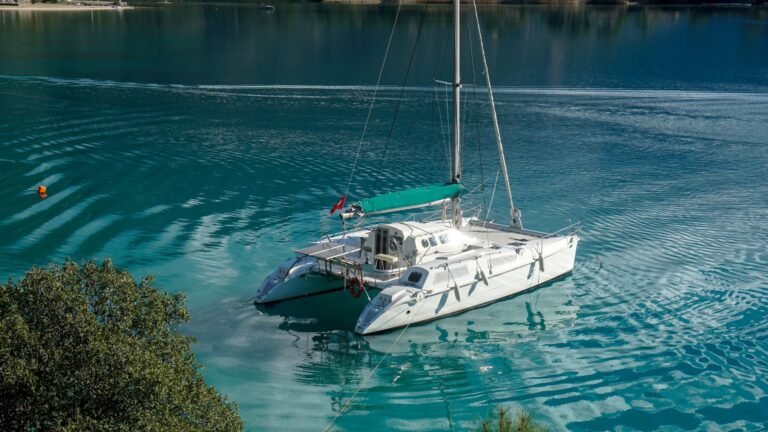
Sailing catamarans hold their value better than most people expect, and they draw two quite different buyers. On one side there are private owners who want the stability and the space, particularly for family cruising. On the other are charter operators building or refreshing a fleet, who buy with occupancy and turnaround in mind. Both groups look hard at the same things: hull condition, generator hours if fitted, and the standard of any recent refit, because a catamaran that has been chartered hard needs that history to be honest and complete.
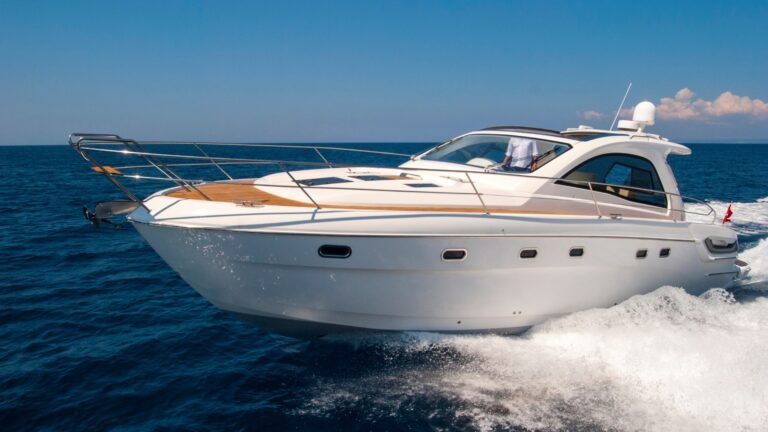
Motor yachts and flybridge boats are bought for a different rhythm of ownership. The buyer is often someone who wants to be on the water for a few hours rather than a few days, moving between anchorages, entertaining on board, then heading home. Range and fuel burn matter less here than they do on a sailing boat. What buyers check is the drive train, the state of the electronics, and how the boat has been used, because a flybridge kept for short local runs wears differently to one used for longer passages.
Larger yachts sell more slowly in this market, and that is simply the nature of the category. The buyers who do come forward tend to be prepared before they arrive: finance in place, a surveyor already chosen, and a clear idea of ongoing costs including crew and berthing. They ask detailed questions early, expect full maintenance records, and move deliberately once they are satisfied, rather than making a quick decision on the day.
A boat sold in Greece changes hands on paper as well as on the water. The buyer wants three things in order: a clean bill of sale, evidence that the previous register has released her, and documentation of her VAT status within the EU. Most owners selling here keep the flag she already wears; a change of flag is a choice, not an obligation, and it is usually driven by the buyer's residence rather than by where the boat is lying.
Where a buyer does want the Greek flag, private pleasure craft are entered through the local port authority and the paperwork is straightforward once the deletion certificate from the old register is in hand. Private boats cruising Greek waters also carry the TEPAI cruising contribution, which is calculated on length and paid monthly or annually. We handle the sequence so the two sides are never waiting on each other, and we tell you before you sign which document is going to be slowest.
Ermoupoli sits on the eastern side of Syros, the administrative capital of the Cyclades and the largest town in the island group, its harbour opening directly onto the Aegean. The town faces the open water that links Syros to the wider chain of Cycladic islands surrounding it, with the port itself forming a natural amphitheatre around the bay. From here, a short passage puts you within reach of the other Cycladic islands that make this stretch of water one of the more navigable cruising grounds in Greece, Syros holding a central position among them rather than sitting at the edge. The nearest airport is Syros Island National Airport Dimitrios Vikelas (JSY), which the Hellenic Civil Aviation Authority lists as 2 km from Ermoupoli, putting it at roughly 5 minutes from the harbour. For an owner weighing up how easily a boat here can be reached, viewed and handed over, that proximity matters as much as the anchorage itself. Ermoupoli is not a remote mooring at the end of a long transfer. It is a working port town with a national airport on its doorstep and the rest of the Cyclades within short striking distance by sea.
We charge 5% of the final sale price and it is payable only on completion. There is nothing to pay up front, no listing fee and no photography charge. If she does not sell, you owe us nothing at all.
No. She stays exactly where she lies at Ermoupoli, Syros and buyers come to the pontoon. Moving a boat for a sale costs money, adds risk and rarely helps. Her own berth at Syros is the best showroom she has.
A correctly priced boat at Ermoupoli, Syros normally sells within three to six months, and most of that time is spent waiting for the right funded buyer rather than waiting for enquiries. Overpriced boats sit for a year or longer.
One named broker handles your boat from listing to handover. The same person answers the enquiry, qualifies the buyer, meets them at the berth at Ermoupoli, Syros and runs the viewing. You are never passed around a call centre.
Proof of ownership, the registration document, the VAT status paperwork and invoices for any major works. Missing paperwork is the most common reason a sale collapses late. This is general information and not legal advice, so check your own position.
We look at recent completed sales of the same model, current asking prices, her condition, her hours and her equipment, then set a figure that attracts funded buyers rather than tyre kickers. A survey usually confirms that number rather than changing it.
Send us the make, model, year and berth number and we will come back with a realistic market figure, not a flattering one. Flat 5% commission on completion, no listing fee, no photography fee.
Value my boat+30 698 013 5656