Six marinas, one named broker, and buyers who are already in Athens. Motor yachts, sailing yachts and catamarans from Rafina to Lavrio.
Send us the boat details+30 698 013 5656Home › Yacht Brokers in Attica | Sell Your Boat From an Athens Berth
If you keep a boat anywhere between Lavrio and Piraeus, the yacht brokers in Attica are the ones who will sell it. Roughly one Greek yacht berth in three sits inside the forty kilometres of coast running from Rafina, round Cape Sounion, to Alimos, and buyers follow the boats. Alimos Marina alone holds 1,100 permanent berths, fifty of them sized for yachts over 25 metres, and it is the largest marina in Greece and the Balkans.
That concentration is why we keep named brokers here, why a private viewing can be arranged at two days notice, and why a boat lying in Attica usually finds a buyer faster than the same boat lying in the Ionian. This page sets out the six marinas that matter, what each one will take, what it costs, and exactly how we sell from them.
Greece has around seventy marinas spread thinly across a very long coastline. Attica is the exception: one region, an hour end to end by road, holding six working marinas and the bulk of the country's professional yacht trade. Brokers, surveyors, delivery skippers, riggers, engine agents, paint shops and the two largest travel lifts in the country all sit inside the same commute.
For an owner that matters more than it sounds. A boat lying in Corfu or Rhodes means a day of travel each way for every viewing, every survey and every sea-worthiness check. A boat lying at Alimos or Zea can be shown at nine in the morning to a buyer who landed at Athens airport the night before, hauled out at Lavrio the same week if the survey asks for it, and antifouled before the offer goes unconditional. Momentum is what closes a boat sale, and Attica is where momentum is cheapest to buy.
It matters for price too. Buyers pay for confidence, and confidence comes from being able to inspect properly. A buyer who can walk the deck, run the engines alongside, lift the boards and have an independent surveyor in the same week will make a firm offer. A buyer who has to book two flights and a ferry will make a conditional one, and conditional offers are where price gets chipped away.
The last reason is simply traffic. Attica is where the charter fleets renew, where owners upgrade, and where boats coming out of the islands are brought to be sold. If you want to understand the wider process first, our national guide on how to sell your boat in Greece covers valuation, paperwork and commission; this page covers doing it from an Attica berth.
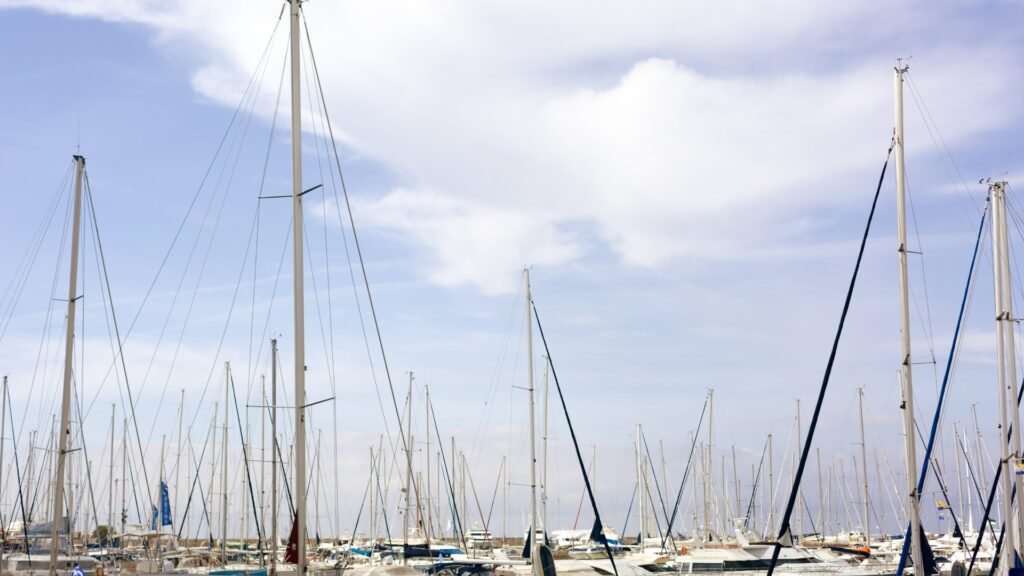
Six marinas carry almost all the brokerage activity in the region, and they are not interchangeable. Each suits a different boat and a different buyer.
Alimos Marina is the volume market: 1,100 permanent berths across 210,000 square metres of land and 428,000 square metres of water, with 1,170 metres of jetties and winter storage for up to 600 boats. Fifty berths take yachts over 25 metres. If your boat is between 10 and 20 metres, this is where the buyers are, and it is where most of our viewings happen. We cover it in detail on our page for owners who want to sell your boat in Alimos Marina.
Zea Marina in Piraeus, run by D-Marin, lists a berthing capacity of just over 500 and accepts yachts up to 150 metres with as much as 8 metres of draft. It is the deep-water option, minutes from the ferry port and the Piraeus trade.
Flisvos Marina at Palaio Faliro has 310 berths, more than half of them able to take a yacht over 30 metres, and is the closest thing Athens has to a superyacht shop window.
Olympic Marine at Lavrio is the yard: 680 berths, 65-tonne and 350-tonne travel lifts and hard standing for up to 700 boats. Nothing else in Attica lifts what Lavrio lifts.
Astir Marina at Vouliagmeni is the small, expensive one, roughly a hundred berths behind a private gate, with three outsize berths at 70, 85 and 104 metres.
Rafina is a commercial ferry port rather than a yacht marina, with only a handful of visitor berths, but it is twenty minutes from Athens airport and the fastest link to the Cyclades.
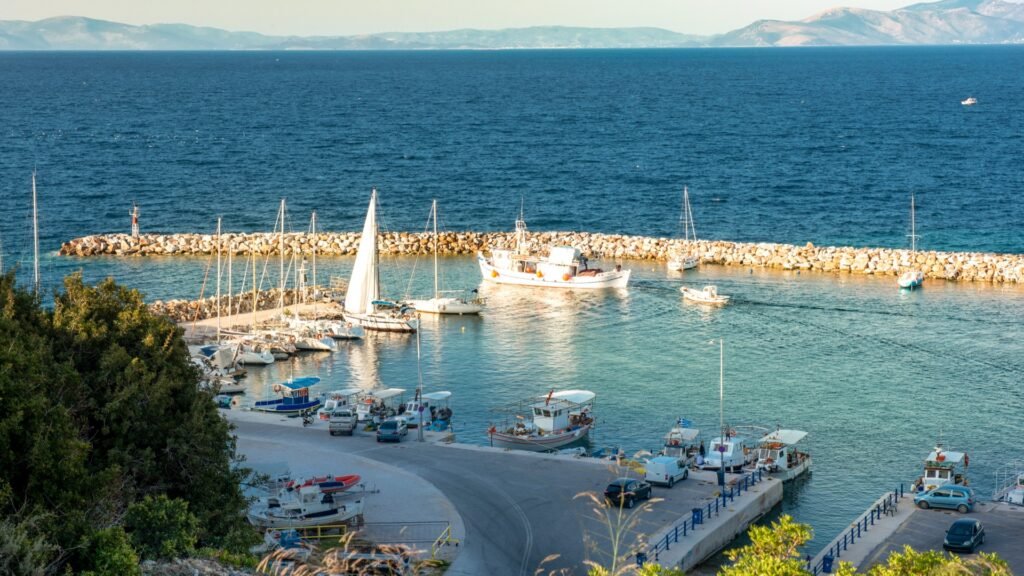
Before you list, check the boat against the berth. Length is rarely the problem in Attica; draft and lifting capacity are. Zea will take 8 metres of draft, but Lavrio hard standing is shallower, and a deep-keeled 20-metre sailing yacht cannot be hauled everywhere a motor yacht can.
The table below is the short version of what each marina in the region will physically accept. Figures come from the marina operators themselves rather than from directory sites, which frequently disagree with them.
| Marina | Berths | Largest yacht | Yard and storage |
|---|---|---|---|
| Alimos Marina | 1,100 | 40 m | Hard standing, up to 600 boats over winter |
| Zea Marina, Piraeus | 504 | 150 m (8 m draft) | Berthing marina, contractors alongside |
| Flisvos Marina | 310 | 110 m | Berthing marina, over half the berths above 30 m |
| Olympic Marine, Lavrio | 680 | 45 m | 65 t and 350 t travel lifts, 700 boats ashore |
| Astir Marina, Vouliagmeni | approx. 100 | 104 m | Private gated marina, no yard |
| Rafina | Limited visitor berths | 25 m | Commercial ferry port, 20 min from the airport |
Athens is not a marina, but it is the reason the marinas work. The yacht brokers in Athens who actually close deals are the ones who can put a buyer, a surveyor, a lawyer and a berth in the same twenty-four hours, and the city is what makes that possible: an international airport with direct flights from every major European capital, a tram and metro network that reaches the coast, and a professional trade that has been serving the Aegean charter fleet for fifty years.
Practically, working with yacht brokers in Athens means your boat is never more than forty-five minutes from where a buyer is staying. It means a marine surveyor can be booked for Thursday rather than the week after next. It means notarial and flag paperwork can be walked through an office in person instead of couriered. And it means that when a buyer asks to see three boats in a day, yours is one of the three, because it is physically possible to show three.
The counterweight is competition. Attica has the most listings in Greece, so a boat that is priced on hope rather than on evidence simply sits there while better-priced boats sell around it. This is the single largest difference we see between owners who sell in one season and owners who are still listed the following spring.
Our answer to that is straightforward. We price against boats that actually sold in the region, not against boats that are still asking. We photograph properly. We qualify the buyer before we book the viewing. And we tell you what we think the boat is worth even when it is less than you hoped.
Send us the make, model, year and where she lies in Attica. One named broker replies, usually the same day, with an honest view of what she is worth and how long she should take to sell. No obligation and no fee unless she sells.
The process is the same wherever the boat lies, but the timings are shorter here. Send us the make, model, year, engine hours and your asking price, and one named broker takes the file. Nobody else in the office touches it, and you deal with that person from first call to completion.
Within a week we come to the berth. We photograph the boat properly, in the right light, with the fenders off and the lines coiled, and we shoot the engine room and the bilges as well as the saloon, because serious buyers look at those first. We take the measurements and the equipment list ourselves rather than copying the previous listing. Where a boat has a survey or a service history, we scan it and hold it ready, because producing paperwork on request is what separates a sale from a stall.
The listing then goes out across the international brokerage networks, not just onto a Greek site, and it appears alongside our other yachts for sale in Greece. Enquiries come to us. We qualify them, we establish that the money is real and the timeframe is real, and only then do we book a private viewing. We never run open days, and we never bring a party of people down to walk over your boat for an afternoon out.
From offer to completion, an Attica sale with clean paperwork typically runs four to six weeks. That is where a broker based in the region pays for itself: everything the deal needs is already local.
Buyers in Attica fall into four fairly consistent groups, and knowing which one your boat suits tells you how to price it.
The largest group is northern European: Germans, Dutch, Austrians, Scandinavians and British buyers looking for a boat already in the Mediterranean so they can skip the delivery. They fly in for two days, see three or four boats, and buy the one that is ready. Presentation beats specification with this group almost every time.
The second group is Greek and Cypriot owners moving up a size. They know the market cold, they know what a berth costs, and they negotiate hard on condition rather than on price. Documentation matters to them more than photography.
The third is the charter trade. Operators renewing a fleet buy in quantity, in winter, and they care about engine hours, berth availability and how quickly the boat can be certified. If your boat is a late-model catamaran or a sub-15-metre motor yacht in good order, this is a real market and it moves in November and December.
The fourth is the small international superyacht market that revolves around Flisvos, Zea and Astir. Fewer buyers, far larger numbers, and a much slower cycle.
The Attica cruising season runs from late April to late October, with July and August the hottest and busiest. The meltemi, the northerly summer wind, blows hardest in July and August and can reach force six or seven for days at a time, which is why Attica boats are so often sold to buyers who intend to cruise the Saronic and the Argolic rather than fight north through the Cyclades.
The selling calendar does not match the cruising calendar, and owners get this wrong constantly. Buyers start looking in January and February, view in March, April and May, and want to be using the boat by June. A boat listed in June has largely missed its own season and will more often than not sit until the following spring.
The practical consequence is simple: if you want to sell next summer, the photographs need to be taken this autumn while the boat still looks used and cared for, and the listing needs to be live by January. Boats photographed in a winter yard under a tarpaulin, with a chalky hull and a green waterline, sell for less. That is not a subtle effect; it is often five per cent of the asking price.
Winter is also the sensible time for the small jobs that lift a valuation: a polish, new fenders, a service, a tidy engine bay. None of it is expensive and all of it is visible in the pictures.
Every marina in this guide is inside an hour of Athens International Airport, and that single fact does more for a Greek boat sale than any amount of advertising. A buyer can land at nine, view at eleven, view a second boat at two and fly home the same evening.
Typical road transfers from the airport are twenty minutes to Rafina, thirty-five to Lavrio, forty to Alimos and Flisvos, forty-five to Vouliagmeni and fifty to Zea in Piraeus, though anything crossing the city centre between four and seven in the evening should be given an extra half hour. Taxis are metered and inexpensive by northern European standards; the X96 express bus runs from the airport to Piraeus around the clock; and the metro reaches Piraeus directly, with the tram running along the coast to Alimos and Flisvos.
For buyers coming from the islands, Piraeus and Rafina are the two ferry gateways. Rafina is the faster route to Andros, Tinos, Mykonos and the northern Cyclades; Piraeus serves everywhere else, including the Saronic islands that most Attica-based owners actually cruise.
If a buyer is arriving by private aircraft, both Athens International and the general aviation terminal at Lavrio-Kapsali handle it, and helicopter transfers to Vouliagmeni and Flisvos are routine in season.
Nothing costs an owner more money than a survey that finds work nobody expected. In Attica you have the option of finding it first.
Olympic Marine at Lavrio is the heavy yard: 65-tonne and 350-tonne travel lifts, hard standing for up to 700 boats, and the full trade on site for paint, osmosis, rigging, engineering and stainless. For most boats between 12 and 30 metres it is the obvious place to haul, and it is thirty-five minutes from the airport if a buyer wants to see the boat out of the water.
Alimos has its own hard standing and takes up to 600 boats over winter, which suits routine antifouling and small jobs where moving the boat to Lavrio is not worth the delivery. Zea and Flisvos are berthing marinas rather than yards; work there is done by visiting contractors alongside.
Our advice to sellers is consistent and unglamorous. Do the survey-obvious items before you list, not after an offer: seacocks, anodes, hoses, batteries, the tender and the liferaft service, and anything on the boat that visibly does not work. A buyer who finds four small faults assumes there are forty. A buyer who finds none pays the asking price.
Our commission is five per cent of the sale price, and it is the only thing you pay us. Photography, the listing, the international network distribution, viewings and the negotiation are all inside that figure. There is no listing fee, no marketing fee and no charge if the boat does not sell.
Berthing is the cost that surprises owners, because it continues while the boat is on the market. Attica annual rates vary widely by marina and by length, with Alimos and Lavrio at the affordable end, Zea and Flisvos considerably higher, and Astir in a category of its own. Budget for the berth for at least one full selling season, and factor it into your asking price rather than discovering it later.
The other costs are small and predictable: a pre-sale survey if you choose to commission one, a lift and scrub if the hull needs it, and the notarial and deletion paperwork at completion. Between them they rarely amount to more than one per cent of a typical sale.
What you should not budget for is a marketing package, a premium listing upgrade or a photography fee. Any of those being charged separately is a sign you are dealing with a listing service rather than a broker. The brokers worth engaging in this region are paid when you are paid, and not one euro before. Everything we do for owners across the country is set out by Yacht Brokers Greece.
For boats between 10 and 20 metres, Alimos Marina, because that is where the buyers already are. For yachts over 30 metres, Flisvos or Zea. If the boat needs lifting or yard work before sale, Olympic Marine at Lavrio.
Five per cent of the sale price, and nothing else. Photography, the listing, international distribution, viewings and negotiation are all included. There is no listing fee and no charge if the boat does not sell.
A correctly priced boat with clean paperwork usually sells within three to six months of listing, and four to six weeks from accepted offer to completion. Overpriced boats routinely sit for more than a year.
No. We handle viewings, the survey attendance and the paperwork on your behalf. Most of our sellers are abroad for the whole process and only appear for signature, which can also be done by power of attorney.
Yes. We arrange private viewings by appointment with buyers we have already qualified. We do not hold open days and we do not bring unvetted groups aboard.
Photograph the boat in early autumn while she still looks used, and be listed by January. Buyers search in January and February, view in spring, and want to be using the boat by June.
One named broker, five per cent, and buyers who are already in Athens. Send us the boat details and we will tell you what she is worth.
Send us the boat details+30 698 013 5656